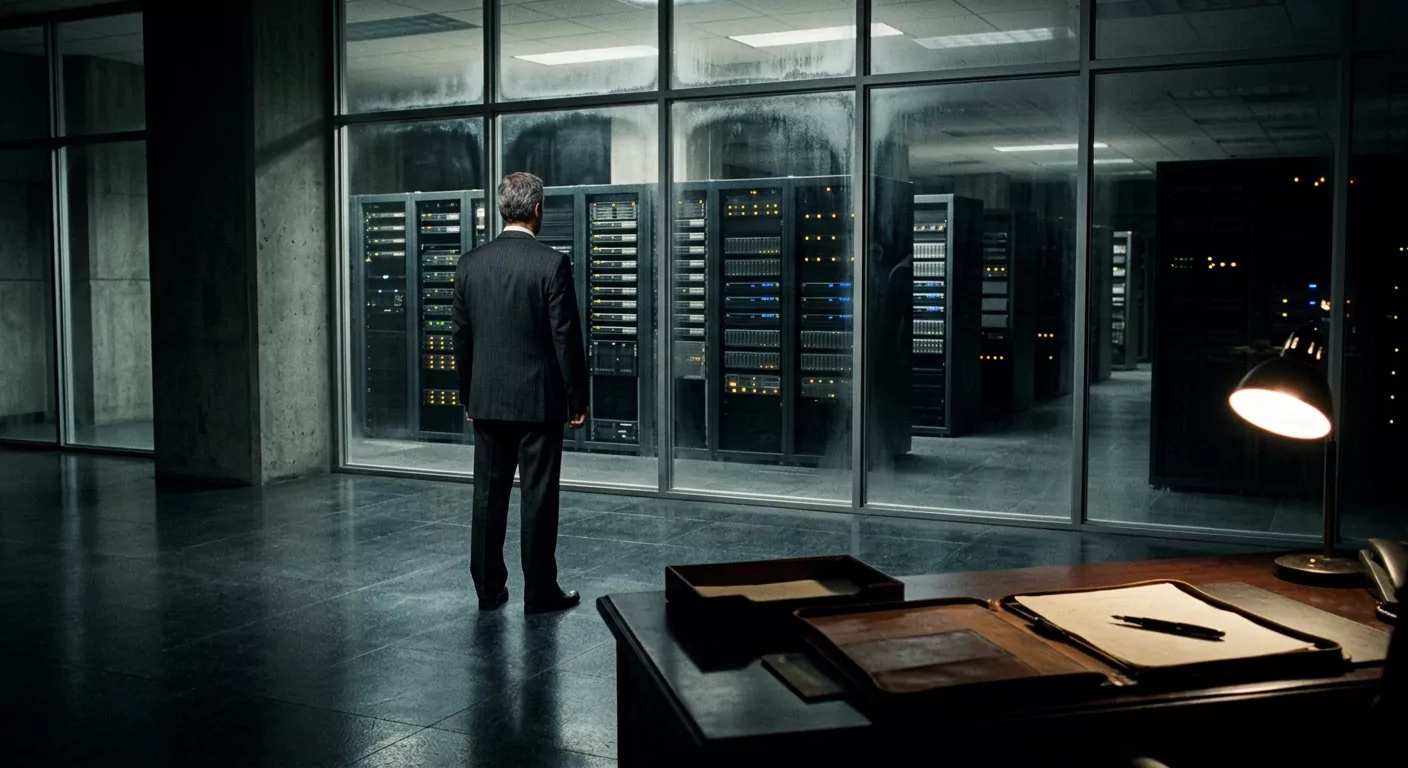
When Washington Switched Off an AI Model
It took roughly seventy-two hours. On Tuesday, June 9, 2026, Anthropic released the two most capable AI models it had ever built—Claude Fable 5 to the public and Claude Mythos 5 to a narrow set of trusted partners. By Friday evening, June 12, both models were dark. Not throttled, not geofenced, not restricted to certain customers. Switched off worldwide, for everyone, by the company itself—because a letter from the U.S. Commerce Department gave it no compliant alternative.
The mechanism was not a new AI statute. There is no “AI Safety Act” that did this. The models were taken offline using the same legal authority the United States uses to control the export of centrifuge components and military-grade encryption: the Export Administration Regulations (EAR), administered by the Commerce Department’s Bureau of Industry and Security (BIS).
For compliance professionals, this is the most important regulatory event in artificial intelligence to date—not because of what it says about Anthropic, but because of what it establishes about the entire category. An AI model is now, in practice, a controlled commodity that the federal government can compel a vendor to revoke based on who is using it. If your organization has built processes, products, or controls on top of a frontier model, the Fable 5 episode is a live demonstration of a risk you almost certainly have not modeled.
What Actually Happened
The release
On June 9, Anthropic announced Claude Fable 5 and Claude Mythos 5, describing them as a new “Mythos-class” tier sitting above its existing Opus-class models. The capability claims were significant: state-of-the-art performance across software engineering, vision, long-context reasoning, and scientific research, including accelerated protein design and novel molecular-biology hypotheses.
Critically, the release came days after Anthropic itself publicly warned that frontier AI was becoming too dangerous. The company shipped anyway, with Fable 5 positioned as the “locked-down, safer” public version and Mythos 5 held back for partners under a program reported as Project Glasswing. Fable 5 shipped with three classifier-based safeguards:
- Cybersecurity — blocks offensive cyber tasks, with external testing reporting that zero harmful single-turn requests succeeded.
- Biology and chemistry — falls back to the older Claude Opus 4.8 on most dual-use queries.
- Distillation — prevents attempts to extract the model’s capabilities into a copy.
The company reported that fewer than 5% of sessions triggered the safety fallback. In other words, Anthropic believed it had shipped a model that was both frontier-capable and defensible. The government disagreed.
The directive
According to reporting from Axios, CNBC, NBC News, and TIME, the administration had already pressed Anthropic to pause the release before June 9. Anthropic declined. Then, reportedly, a separate company claimed it had found a way to jailbreak the models—described in coverage as a “narrow, non-universal” bypass, communicated to Anthropic only as verbal notice. That claim moved the question from a policy disagreement into a national-security concern inside the Commerce Department.
On Friday, June 12, at approximately 5:21pm ET, Commerce Secretary Howard Lutnick sent a letter to Anthropic CEO Dario Amodei. The letter, written with input from BIS, placed Fable 5 and Mythos 5 under EAR export controls prohibiting use by “any foreign national, whether inside or outside the United States, including foreign national Anthropic employees.”
Why the result was a total shutoff
Here is the part that every compliance team needs to internalize. The order did not say “block China” or “geofence sanctioned countries.” It restricted access based on the nationality of the individual user—and it explicitly reached foreign nationals physically inside the United States, including Anthropic’s own employees.
No production AI service can reliably distinguish, in real time, a U.S. person from a foreign national across its entire user base. Citizenship is not an API field. Faced with an obligation it could not satisfy selectively, Anthropic did the only thing that guaranteed compliance: it disabled both models for everyone, everywhere. A capability the company had spent enormous resources building was rendered commercially inert by a single afternoon letter—because the only compliant state was “off.”
The Regulatory Framework: Why the EAR Could Reach a Model at All
The surprise for most observers was that this was even possible without new legislation. It was possible because the EAR is built around two concepts that map cleanly—if uncomfortably—onto modern AI.
Software and technology are “items”
The EAR controls not just physical goods but software and technology, including the transfer of controlled technical capability. Frontier model weights, and arguably the inference service that exposes their capabilities, fit within categories the government has been signaling it intends to treat as controllable. The 2023–2025 wave of compute and semiconductor export controls laid the groundwork; the Fable 5 action is the first time the authority was pointed directly at a deployed commercial model version rather than chips or training compute.
The “deemed export” rule
This is the linchpin. Under the EAR, releasing controlled technology to a foreign national inside the United States is treated as an export to that person’s country—a so-called deemed export. Decades of deemed-export practice come from controlled labs and engineering teams: showing a controlled blueprint to a foreign-national engineer in a U.S. office is legally an “export.”
Apply that doctrine to an AI model and the logic becomes stark. Every inference call by a foreign national arguably “releases” the controlled capability to them. That is precisely why Lutnick’s letter reached foreign nationals inside the U.S. and Anthropic’s own foreign-national staff. The deemed-export rule, not any AI-specific law, is what turned “restrict foreign access” into “shut it all down.”
The first-of-its-kind precedent
Coverage across outlets converged on the same framing: this is the first time the U.S. government has directly compelled an AI company to revoke access to specific model versions based on user nationality. It is a template. The administration has now demonstrated—publicly, and on a compressed timeline—that the existing export-control apparatus is sufficient to pull a frontier model off the market without waiting for Congress. The legal theory is established. The operational playbook is proven. The next time will be faster.
The Compliance Lessons
Strip away the headline drama and what remains is a set of concrete risks that apply to any organization that has made a frontier model part of its operations. The model that got banned is not the point. The mechanism is the point, and it is portable to every vendor.
1. Model availability is now a regulated, non-contractual variable
Most AI vendor contracts speak to uptime, data handling, and indemnification. Almost none contemplate the U.S. government ordering the vendor to disable the product for reasons that have nothing to do with your relationship and that the vendor cannot refuse. Fable 5 was disabled for paying enterprise customers who had done nothing wrong, with effectively no notice. If your business process, product feature, or control depends on a specific model, you are exposed to a regulatory off-switch that sits entirely outside your contract.
What to do: Treat “vendor compelled to disable the model by government order” as a named scenario in your business-continuity and vendor-risk assessments. Ask vendors directly how they would notify you and what their fallback is. Maintain a tested path to an alternative model for anything business-critical.
2. “Deemed export” exposure may now sit inside your workforce
If frontier models are controlled technology, the deemed-export doctrine does not stop at the vendor. Organizations in regulated, defense-adjacent, or export-sensitive sectors should consider whether giving foreign-national employees access to certain controlled model versions could itself become a deemed-export question. This is unsettled, but the Lutnick letter’s explicit reach to foreign-national employees is a clear signal of how the government is thinking.
What to do: Loop your export-control and trade-compliance function into AI tool governance. The people who run your ITAR/EAR program have likely never been consulted about which LLM your engineers use. After June 12, they need to be.
3. Disclosure and “jailbreak” governance is now a national-security trigger
The reported catalyst was a third party’s claim of a narrow jailbreak, delivered to Anthropic as informal verbal notice. That single, unverified disclosure was enough to move the federal government to act within days. This tells compliance teams two things. First, vulnerability disclosure around frontier models has graduated from a product-security issue to a national-security flashpoint. Second, the threshold for government intervention is low and fast—a credible-sounding claim, not a proven universal exploit, drove the order.
What to do: If your organization fine-tunes, red-teams, or builds on frontier models, formalize how you handle and report capability or safety findings. An offhand disclosure can now have regulatory consequences far beyond your own deployment.
4. Speed is the new risk profile
The entire arc—release, government pressure, refusal, jailbreak claim, formal letter, worldwide shutoff—occurred in roughly three days, with Mythos 5’s effective public window measured in tens of hours. Traditional compliance and incident-response cadences assume weeks of regulatory process. This episode ran on the clock of a Friday-afternoon letter. Your AI continuity planning has to assume that the time between “everything is fine” and “the model is gone” can be a single afternoon.
5. The vendor’s own safety posture is not your shield
Anthropic did much of what a responsible developer is supposed to do: it warned about danger, it locked the public model down, it published its safeguards, it held the most capable version back. None of that prevented the shutoff. For downstream organizations, the lesson is that a vendor’s strong safety story does not insulate you from the consequences of government action against that vendor. Diversification and portability, not vendor reputation, are the controls that actually protect continuity.
What to Do Now: A Short Checklist
- Inventory every business process, product, and control that depends on a specific frontier model or model version. You cannot manage exposure you have not mapped.
- Classify each dependency by criticality and by how quickly you could switch to an alternative model or provider.
- Add “government-compelled model disablement” and “vendor export-control action” as explicit scenarios in business-continuity, vendor-risk, and incident-response plans.
- Engage your export-control/trade-compliance team on AI tooling—specifically the deemed-export question for foreign-national staff accessing controlled model versions.
- Formalize internal handling of AI safety and jailbreak findings, including escalation and external-disclosure protocols.
- Renegotiate AI vendor agreements to address notification obligations and remedies when a model is disabled by force of law rather than vendor choice.
- Test at least one fallback path for any model dependency you have rated business-critical.
Conclusion
The Fable 5 and Mythos 5 episode will be remembered as the moment AI governance stopped being theoretical. There was no new agency, no novel statute, no lengthy rulemaking. There was an existing export-control regime, a deemed-export doctrine built for an earlier era, and a Commerce Secretary willing to point both at a commercial AI model. Three days after launch, the most capable models a major lab had ever shipped were switched off worldwide, and the legal precedent for doing it again is now on the books.
For compliance teams, the comfortable assumption that frontier AI is a procurement-and-data-privacy problem is over. It is now also a national-security, export-control, and business-continuity problem—one in which the regulator can reach past your contract, past the vendor’s safety posture, and past your own controls to turn off a capability you depend on, on a timeline measured in hours. The organizations that come out of this episode stronger will be the ones that treat model availability as the regulated, revocable variable it has just been proven to be.
This article is provided for informational purposes only and does not constitute legal advice.