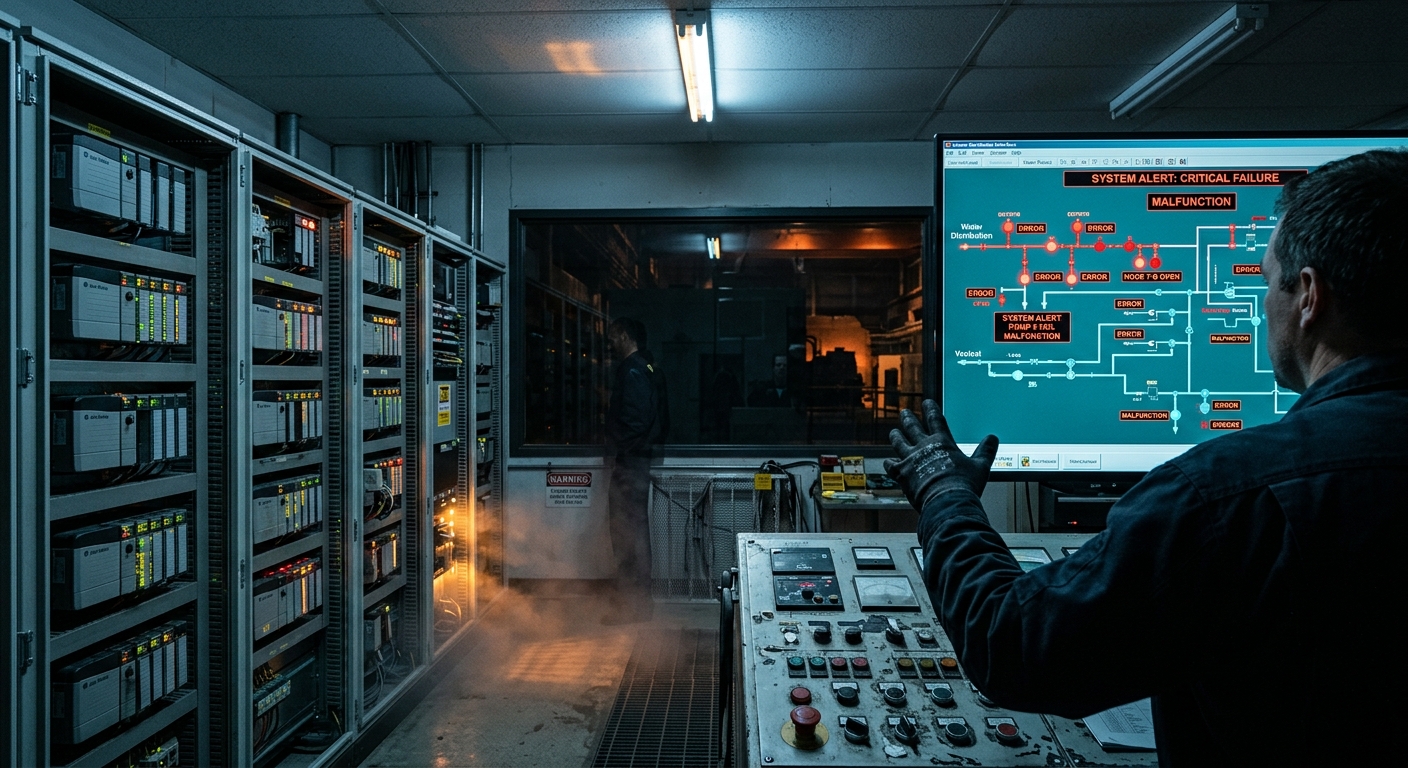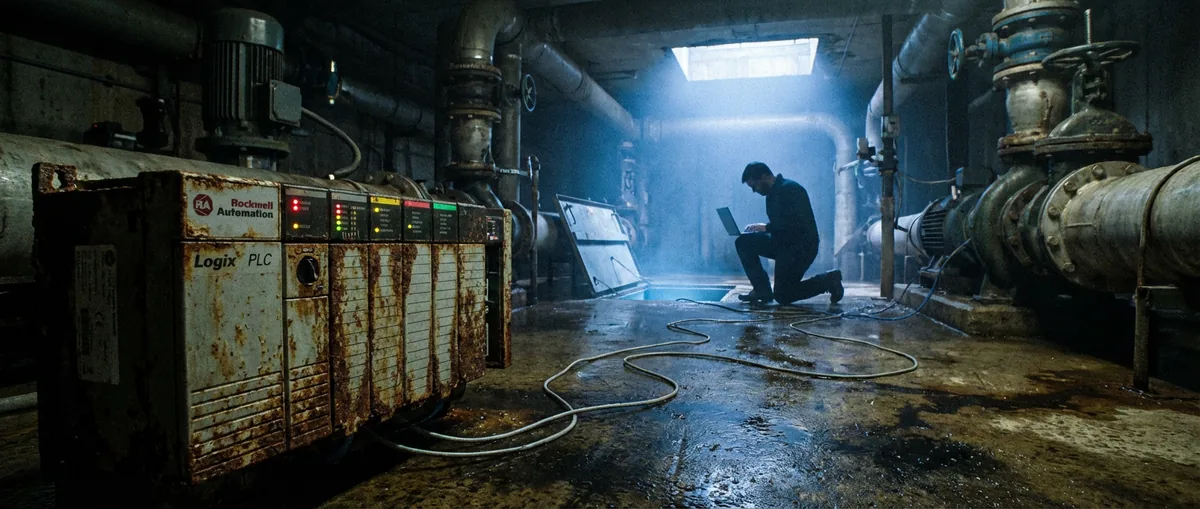
On April 7, 2026, six U.S. federal agencies issued a joint cybersecurity advisory with a message that is difficult to misread: Iran is actively exploiting programmable logic controllers at U.S. drinking water, wastewater, and energy facilities, and the disruptions have already begun.
The advisory — signed by the EPA, FBI, CISA, NSA, Department of Energy, and U.S. Cyber Command — formally attributes the campaign to CyberAv3ngers, a threat group also tracked by Microsoft as Storm-0784, with direct attribution to Iran’s Islamic Revolutionary Guard Corps Cyber-Electronic Command (IRGC-CEC). This is not a warning about a theoretical future threat. It is a notification that an adversary with state resources and political motivation is already inside U.S. operational technology environments.
For compliance officers and security leadership at water utilities, municipal governments, and energy operators, the advisory carries both a technical directive and a regulatory accountability dimension that cannot be deferred.
What the Advisory Describes
The Threat Actor
CyberAv3ngers is an IRGC-affiliated group that has conducted destructive attacks against Israeli and U.S. industrial infrastructure since at least 2023. The group’s earlier campaigns targeted Israeli-made Unitronics PLCs at U.S. water facilities in late 2023 — attacks that were widely reported but resulted in limited operational disruption. The 2026 campaign represents a significant escalation in both sophistication and impact.
The group’s state-directed structure means its operations are not constrained by typical criminal motivations. CyberAv3ngers does not need a financial return. It operates at the direction of the IRGC-CEC with geopolitical objectives — disruption, demonstration of capability, and the accumulation of persistent access for potential future use.
The Attack Surface
The 2026 campaign exploits vulnerabilities in Rockwell Automation’s Logix controllers and Studio 5000 Logix Designer software, specifically:
- CVE-2021-22681: An authentication bypass vulnerability in Rockwell Automation’s Logix controllers that allows an unauthenticated attacker to forge a valid authentication token and gain control of a Logix controller
- Malicious manipulation of project files in Studio 5000 Logix Designer
These are not zero-day vulnerabilities. CVE-2021-22681 was disclosed in 2021. The patch has been available for five years. The advisory’s implicit finding is that a significant portion of U.S. water and energy infrastructure is running unpatched PLC firmware on industrial control systems that were never designed with internet connectivity in mind — and has been for years.
Who Is Being Targeted
The advisory identifies three primary target sectors:
- Water and Wastewater Systems (WWS): Drinking water treatment facilities, wastewater treatment plants, pumping stations
- Energy Sector: Power generation and distribution infrastructure
- Government Services and Facilities: Including local municipalities that operate their own water and utility systems
The geographic scope is national. The advisory does not identify specific victims or states, but the campaign has been active since at least March 2026 with confirmed disruptions.
The Compliance Dimension: What Law Requires
America’s Water Infrastructure Act (AWIA) of 2018
The AWIA requires community water systems serving more than 3,300 people to:
- Conduct a risk and resilience assessment covering physical security, cybersecurity of operational technology, monitoring practices, and water quality
- Develop or update an Emergency Response Plan addressing the risks identified in the assessment
- Certify completion to the EPA
The AWIA certification cycle requires assessments every five years. For water systems that completed their last assessment in 2021, recertification is due in 2026 — directly coinciding with an active threat campaign against their sector. Systems that have not completed current assessments are out of compliance with existing federal law regardless of this advisory.
Safe Drinking Water Act and EPA Cybersecurity Authority
The EPA has authority under the Safe Drinking Water Act to enforce cybersecurity requirements at public water systems. Following the 2023 attempt to include cybersecurity in sanitary surveys (which was overturned by court challenge), Congress has continued to debate expanded EPA cybersecurity authority.
The April 7 advisory itself is an exercise of EPA’s advisory and enforcement coordination role. Water systems that receive the advisory and take no action are creating a documented record of inaction that will be difficult to defend in any post-incident regulatory proceeding.
CIRCIA Reporting Obligations
The Cyber Incident Reporting for Critical Infrastructure Act (CIRCIA) final rule is expected by May 2026. When effective, it will require critical infrastructure operators — including water sector entities — to:
- Report significant cyber incidents to CISA within 72 hours
- Report ransomware payments within 24 hours
Water and wastewater systems are designated critical infrastructure under Presidential Policy Directive 21. Any disruption caused by CyberAv3ngers activity at a covered water facility is a CIRCIA-reportable incident under the anticipated final rule. Operators should not wait for the final rule’s effective date to establish incident reporting procedures — the advisory makes clear that incidents are happening now.
NIST Cybersecurity Framework for Water Sector
CISA’s Water and Wastewater Systems Sector Cybersecurity Framework Implementation Guidance maps the NIST CSF to water utility operations. The advisory’s technical recommendations align directly with NIST CSF functions:
- Identify: Asset inventory of all PLCs and industrial control systems
- Protect: Patch management, network segmentation, MFA
- Detect: Anomaly monitoring for ICS/OT environments
- Respond: Incident response playbooks for OT disruptions
- Recover: Offline backups of PLC configurations and project files
Technical Mitigations Required by the Advisory
The joint advisory (CISA Advisory AA26-097A) specifies the following mitigations. For covered operators, these are not suggestions — they represent the federal government’s documented baseline for what should have been in place:
Patch and update immediately:
- Apply Rockwell Automation patches for CVE-2021-22681 and all available Studio 5000 Logix Designer updates
- Audit all PLC firmware versions across the OT environment and update to current supported versions
- Subscribe to ICS-CERT and vendor security advisories for all industrial control system components
Network segmentation:
- Ensure OT/ICS networks are fully segmented from corporate IT networks and from the public internet
- Implement unidirectional data diodes or DMZ architectures for any required data flows between IT and OT environments
- Remove remote access capabilities from PLCs that do not require them operationally
Authentication controls:
- Enable authentication on all PLCs and industrial controllers — many default to unauthenticated access
- Implement MFA for any remote access to OT environments
- Audit and remove default credentials on all ICS components
- Apply principle of least privilege to all OT user accounts
Offline backups of PLC configurations:
- Maintain current offline backups of all PLC project files and configurations
- Store backups in a location that is not accessible from network-connected systems
- Test restoration procedures regularly — the ability to restore a PLC configuration from backup after a destructive attack is a critical recovery capability
Monitoring and detection:
- Deploy OT-specific monitoring tools capable of detecting anomalous commands, unusual project file modifications, and unauthorized access attempts against PLCs
- Establish baseline behavior for normal PLC operations to enable anomaly detection
- Ensure that OT monitoring alerts reach security operations staff with ICS expertise
Vendor and supply chain controls:
- Contact Rockwell Automation directly to verify the security posture of your specific controller models and software versions
- Review third-party maintenance and remote support arrangements — vendor remote access to PLCs is a documented attack vector
What “Real Disruptions” Means for OT Security Compliance Programs
The advisory’s acknowledgment that disruptions have already occurred is significant. It means this is not a theoretical exercise in pre-positioning or espionage. CyberAv3ngers has demonstrated a willingness to disrupt operational processes at U.S. water facilities.
Disruption of a drinking water treatment facility can mean:
- Loss of chlorination control — risking either under-treatment (contamination) or over-treatment (chemical hazard)
- Loss of pump control — disrupting distribution pressure and flow
- Loss of visibility into treatment processes — forcing manual operation or shutdown
These outcomes directly affect public health. They also trigger notifications to state drinking water primacy agencies, EPA regional offices, local emergency management, and — under CIRCIA once effective — CISA.
For compliance and legal functions at water utilities, the message is that the risk calculus has changed. ICS/OT security is no longer a purely technical matter that lives in the engineering department. It is a regulatory compliance matter, a public health liability, and a board-level risk.
Compliance Checklist: Water, Wastewater, and Energy OT Operators
Immediate actions (this week):
- Identify all Rockwell Automation Logix controllers and Studio 5000 installations in your environment
- Apply CVE-2021-22681 patches and all available Rockwell firmware updates
- Verify network segmentation between OT and IT environments — confirm no direct internet paths to PLCs
- Back up all PLC project files offline immediately
- Review remote access arrangements and disable any that are not operationally necessary
Short-term (30 days):
- Complete AWIA risk and resilience assessment if overdue
- Update Emergency Response Plan to include cyber incident scenarios affecting OT/ICS systems
- Deploy or expand OT monitoring coverage to include anomaly detection for PLC commands and project file access
- Conduct tabletop exercise simulating CyberAv3ngers-style PLC disruption and test recovery from offline backups
Regulatory readiness:
- Establish CIRCIA incident reporting procedures now — do not wait for the final rule’s effective date
- Document the advisory and your response actions — regulators will ask
- Ensure EPA regional office contact information is current and that staff know who to call in the event of a cyber-induced operational disruption
- Notify your sector information sharing organization (WaterISAC) of any anomalous activity consistent with the advisory
Conclusion
The CyberAv3ngers advisory is the federal government making something explicit that the cybersecurity community has been warning about for years: adversaries with state resources are actively exploiting the security gap between what critical infrastructure operators have deployed and what their threat environment requires. That gap exists because OT environments were never designed for internet connectivity, patching is operationally complex, and the regulatory framework for ICS security has lagged far behind the threat.
The April 7 advisory does not close that gap. But it removes any remaining ambiguity about whether the threat is real, who is responsible, and what baseline mitigations are expected. Water and energy operators who receive this advisory, take no action, and subsequently experience a disruption will find themselves in an untenable regulatory and legal position.
The patch for CVE-2021-22681 has been available for five years. There is no acceptable reason it is not deployed.
This article is provided for informational purposes only and does not constitute legal advice. Organizations should consult qualified legal counsel and their sector-specific regulatory contacts regarding their specific compliance obligations.