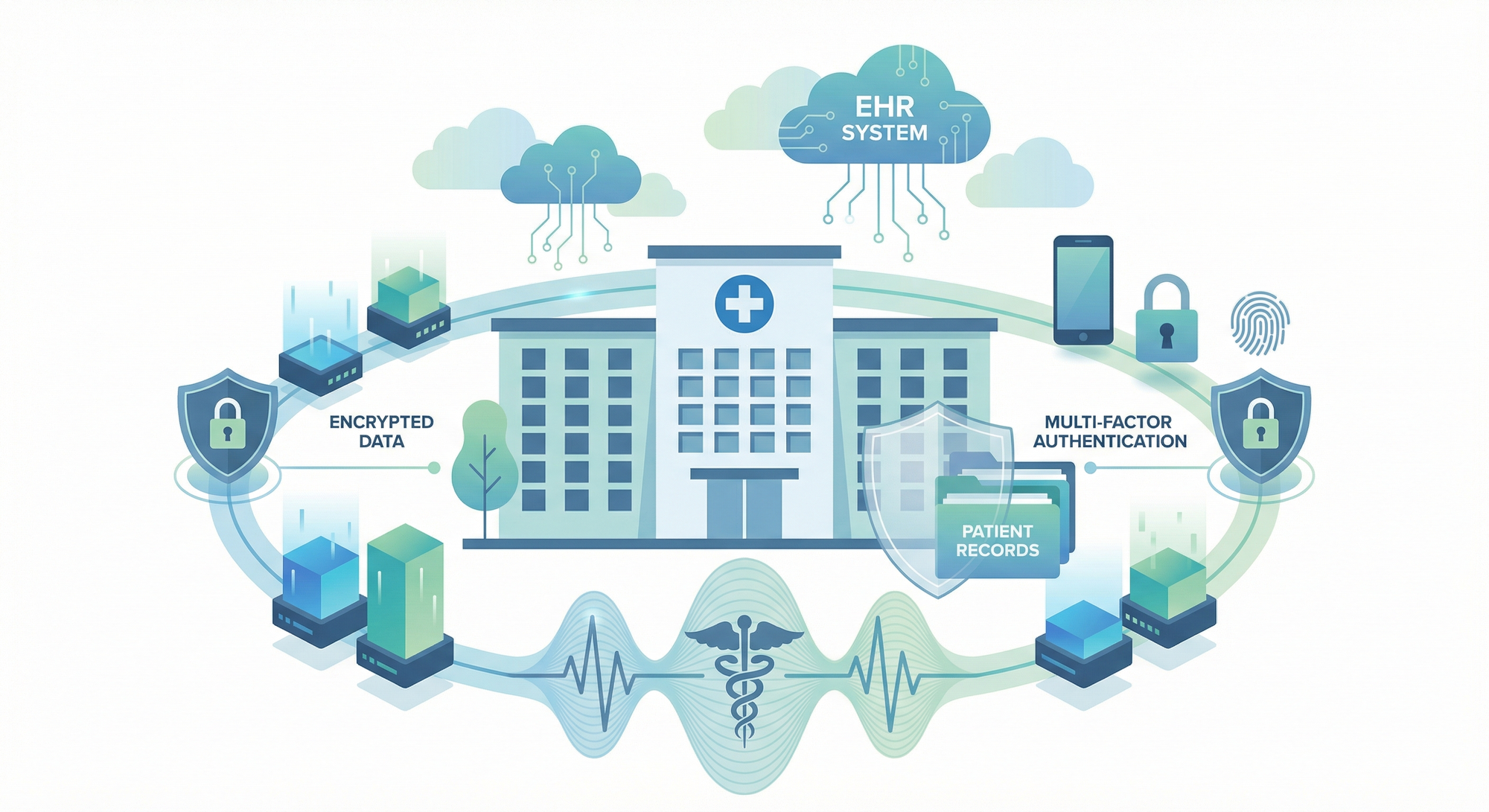
The U.S. Department of Health and Human Services (HHS) Office for Civil Rights (OCR) has proposed significant amendments to the HIPAA Security Rule that would fundamentally strengthen cybersecurity requirements for healthcare organizations and their business associates. With the final rule expected in May 2026, covered entities and business associates face an unprecedented mandate to implement stricter encryption requirements, conduct enhanced risk analyses, and demonstrate accountability for safeguarding protected health information (PHI) in an era of escalating ransomware attacks and sophisticated cyber threats targeting the healthcare sector.
Executive Summary
The proposed HIPAA Security Rule amendments, announced in January 2026, represent the most significant overhaul of healthcare cybersecurity requirements since the Security Rule’s original implementation in 2005. The amendments respond to over two decades of technological evolution, the digital transformation of healthcare delivery, and the alarming surge in cyberattacks targeting hospitals, health systems, and healthcare business associates.
Key provisions of the proposed amendments include:
- Mandatory encryption: Moving encryption from “addressable” to “required” specification for data at rest and in transit- Enhanced risk analysis: More prescriptive requirements for comprehensive, documented, and ongoing risk assessments- Multi-factor authentication: Required for access to systems containing ePHI- Network segmentation: Mandatory isolation of systems containing ePHI- Incident response and resilience: Formal incident response plans and business continuity testing requirements- Supply chain security: Enhanced requirements for assessing and managing business associate and vendor risks- Patch management: Timely application of security patches and vulnerability remediation- Security awareness training: Enhanced and more frequent training requirements
The final rule, expected in May 2026, will likely include a 12-24 month implementation timeline, meaning covered entities and business associates must prepare for compliance by late 2027 or 2028. However, OCR’s January 2026 Cybersecurity Newsletter emphasized that organizations should not wait for the final rule—immediate hardening of infrastructure is expected based on current Security Rule obligations and the deteriorating threat landscape.
Background: Why HIPAA Security Rule Reform Is Urgent
The Healthcare Cybersecurity Crisis
The Numbers Tell the Story:
Ransomware Impact:
- Health-ISAC: 455 ransomware incidents targeting health organizations globally in 2025- Qilin, INC Ransom, SAFEPAY: Most active ransomware groups targeting healthcare- Average healthcare data breach costs exceed $10 million (IBM Security)- Patient care disruptions, surgery cancellations, ambulance diversions from ransomware
Data Breaches:
- 2025: Over 500 large healthcare data breaches (affecting 500+ individuals) reported to OCR- Approximately 40 million individuals affected by healthcare breaches in 2025- Business associate breaches increasingly common (third-party risk)
Enforcement:
- 2025: OCR announced over $10 million in HIPAA violations penalties- Thousands of investigations conducted- Settlements increasingly requiring multi-year independent compliance monitoring
Patient Impact:
- Clinical care disrupted (EHR systems offline, diagnostic delays)- Patient safety incidents (medication errors from paper-based workarounds)- Privacy violations (sensitive diagnoses, mental health records, HIV status exposed)- Identity theft and fraud targeting patients
Technological Evolution Since 2005
When Security Rule Was Implemented:
- Paper medical records still common- Limited EHR adoption- Minimal cloud computing- Basic internet connectivity- Limited mobile device usage- Minimal telehealth
Current Healthcare Technology Landscape:
- Near-universal EHR adoption (90%+ hospitals, 85%+ physician practices)- Extensive cloud services (EHR hosting, backup, analytics)- Proliferation of connected medical devices (IoT)- Mobile health apps and wearables- Telemedicine platforms (accelerated by COVID-19)- AI and machine learning for diagnostics and treatment planning- Health information exchanges (HIEs) for data sharing
The Gap: The 2005 Security Rule was designed for a fundamentally different technological environment. While technology-neutral in principle, its requirements have not kept pace with modern threats and architectures.
High-Profile Incidents Driving Reform
Change Healthcare / UnitedHealth Group (February 2024)
- BlackCat/ALPHV ransomware attack on Change Healthcare- Disrupted pharmacy claims processing for weeks- Affected thousands of healthcare providers nationwide- Estimated costs exceeding $870 million for UnitedHealth- Demonstrated catastrophic impact of healthcare supply chain compromise
CommonSpirit Health (October 2022)
- Ransomware attack on one of nation’s largest health systems- 142 hospitals across 21 states affected- Systems offline for weeks- Estimated costs exceeding $150 million
Scripps Health (May 2021)
- Ransomware attack forcing EHR and patient portal offline- Diversions of emergency patients- Months-long recovery- $112.7 million settlement payment to affected patients (initially)
UniversalHealth Services (September 2020)
- Ryuk ransomware affecting ~400 facilities- IT systems shut down for days- Manual paper-based processes- Delayed patient care and transferred patients
These incidents revealed common weaknesses:
- Inadequate network segmentation- Lack of multi-factor authentication- Unencrypted data stores- Insufficient backup and recovery capabilities- Weak vendor risk management- Delayed patch management
Key Provisions of the Proposed Amendments
1. Mandatory Encryption
Current Rule (2005): Encryption is an “addressable” specification under § 164.312(a)(2)(iv) and § 164.312(e)(2)(ii):
- Covered entities must implement encryption OR document why it’s unreasonable and implement equivalent alternative measure- Many organizations chose not to encrypt, citing cost or operational challenges- OCR enforcement focused on lack of encryption as evidence of inadequacy, but didn’t mandate it
Proposed Amendment: Encryption becomes required specification:
- Data at rest: All ePHI stored on servers, workstations, laptops, mobile devices, backup media, removable storage must be encrypted- Data in transit: All ePHI transmitted across networks (internal and external) must be encrypted using industry-standard protocols (TLS 1.3+)- Encryption standards: NIST-approved algorithms (AES-256 for data at rest, TLS 1.3 for transit)- Key management: Secure key generation, storage, rotation, and destruction procedures required
Rationale:
- Encryption is now standard, affordable, and widely supported- Encrypted data presumed not breachable under breach notification safe harbor- Modern threats make unencrypted ePHI indefensible
Implementation Challenges:
Legacy Systems:
- Older EHR systems may not support encryption without upgrade- Medical devices with embedded storage often lack encryption capability- Costs of replacing or upgrading non-compliant systems
Performance Concerns:
- Encryption overhead on system performance- Impact on diagnostic imaging, real-time monitoring
Operational Complexity:
- Key management infrastructure- Recovery procedures when keys are lost- Balancing security with emergency access needs
Mitigation:
- Phase-in period (likely 12-18 months for data at rest, 6-12 for transit)- Guidance on acceptable encryption technologies- Exemptions for specific medical devices pending manufacturer updates
2. Enhanced Risk Analysis Requirements
Current Rule: § 164.308(a)(1)(ii)(A) requires risk analysis but provides minimal specificity:
- Assess potential risks and vulnerabilities- No prescribed methodology or frequency- Documentation standards unclear
Proposed Amendment: Detailed, prescriptive risk analysis requirements:
Comprehensive Scope:
- All ePHI, regardless of format or location- All systems that create, receive, maintain, or transmit ePHI- All physical locations where ePHI is stored or accessed- All business associates and subcontractors with ePHI access- All potential threats (malicious and non-malicious)- All vulnerabilities (technical, physical, administrative)
Formal Methodology:
- Must use recognized risk assessment framework (NIST, HITRUST, ISO 27005)- Document assets, threats, vulnerabilities, current safeguards, likelihood, impact- Quantitative or qualitative risk determination- Risk treatment decisions (accept, mitigate, transfer, avoid)
Frequency:
- Initial risk analysis upon rule compliance deadline- Annual comprehensive reassessment- Ad-hoc reassessment when:Significant system changes (new EHR, major upgrades)- New business associate relationships- Security incidents occur- New threats emerge (e.g., novel ransomware tactics)- Organizational changes (mergers, acquisitions)
Documentation:
- Written risk analysis report- Risk register maintained and updated- Decisions about safeguards documented- Remediation plans and timelines- Board or management review and approval
Integration with Risk Management:
- Risk analysis informs security management process- Regular reporting to senior leadership and board- Budget allocation based on identified risks- Audit trails of risk decisions
Rationale:
- Many breaches result from inadequate risk analysis- OCR enforcement findings frequently cite risk analysis deficiencies- Prescriptive requirements reduce ambiguity and improve compliance
3. Multi-Factor Authentication (MFA)
Current Rule: Authentication is required (§ 164.312(d)), but specific methods not prescribed.
Proposed Amendment: Mandatory MFA for:
- Remote access to systems containing ePHI- Access to EHR and other systems with ePHI (even on internal networks)- Privileged/administrative accounts- Business associate access to covered entity systems
Acceptable MFA Methods:
- Time-based one-time passwords (TOTP, e.g., Google Authenticator)- SMS/text message codes (acceptable but discouraged due to SIM-swapping risks)- Hardware tokens (YubiKey, RSA SecurID)- Biometric authentication (fingerprint, facial recognition)- Push notifications (Duo, Microsoft Authenticator)- FIDO2/WebAuthn standards
Exemptions (Limited):
- Emergency access scenarios (documented break-glass procedures)- Specific legacy systems where technically infeasible (time-limited exemption with remediation plan)
Rationale:
- Passwords alone are insufficient against phishing, credential stuffing, brute force- MFA prevents majority of account compromise attacks- Technology widely available and affordable
Implementation Considerations:
User Experience:
- Healthcare workers access numerous systems throughout shift- MFA friction can slow clinical workflows- Single sign-on (SSO) can reduce MFA prompts while maintaining security
Emergency Access:
- Life-threatening situations may require bypassing MFA- Documented break-glass procedures with audit logging- Post-event review of emergency access use
Cost:
- MFA solutions range from free (software tokens) to enterprise platforms ($5-15/user/month)- Implementation and user training costs
4. Network Segmentation
Current Rule: Implicit in access controls (§ 164.312(a)(1)) but not explicitly required.
Proposed Amendment: Mandatory network segmentation:
- Systems containing ePHI must be isolated from general IT networks- Use of VLANs, firewalls, or similar technologies to create security boundaries- Segmentation between:Clinical networks (EHR, medical devices) and administrative networks (email, internet)- Different departments or business units- Production and test/development environments- Internal networks and guest/patient WiFi
Micro-Segmentation:
- For large organizations, further segmentation recommended (e.g., between hospital campuses, by data sensitivity)
Rationale:
- Prevent lateral movement after initial compromise- Ransomware containment- Reduce blast radius of breaches
Implementation:
- Large-scale network redesign for many organizations- Costs of additional networking equipment- Operational complexity (access provisioning, troubleshooting)- Clinical workflow considerations (providers need seamless access across segments)
5. Incident Response and Resilience
Current Rule: Emergency mode operation plan required (§ 164.308(a)(7)(i)) but minimal prescriptive detail.
Proposed Amendment:
Formal Incident Response Plan:
- Written, documented, tested plan for responding to security incidents- Defined roles and responsibilities- Detection and analysis procedures- Containment, eradication, recovery processes- Communication protocols (internal, patients, OCR, law enforcement, media)- Post-incident review and lessons learned
Business Continuity and Disaster Recovery:
- Documented procedures for maintaining critical operations during cyber events- Recovery Time Objectives (RTO) and Recovery Point Objectives (RPO) defined- Backup and restoration capabilities- Alternate processing sites or failover systems
Testing Requirements:
- Annual tabletop exercise simulating cyber incident- Biennial full-scale disaster recovery test- Documentation of test results, gaps identified, remediation
Backup Requirements:
- Regular backups of all ePHI- Offline or immutable backups (protect against ransomware encryption)- Geographically dispersed backup storage- Regular restoration testing (ensure backups are viable)
Rationale:
- Ransomware and other incidents are inevitable- Resilience and recovery capability minimize patient harm and business impact- Organizations without backups often pay ransoms
6. Supply Chain and Business Associate Security
Current Rule: Business associate agreements (BAAs) required (§ 164.308(b)), but limited prescriptive requirements for due diligence.
Proposed Amendment:
Enhanced Due Diligence:
- Initial security assessment of business associates before engagement- Risk-based assessment (higher scrutiny for BA with extensive ePHI access or processing)- Review of BA’s security policies, incident response capabilities, prior breaches- Evidence of BA’s compliance (SOC 2 reports, HITRUST certification, security audits)
Ongoing Monitoring:
- Periodic reassessment of BA security posture- Review of BA security incidents and breach notifications- Right to audit BA security practices- Termination provisions for BA non-compliance
Supply Chain Mapping:
- Inventory of all business associates and subcontractors- Understanding of data flows to/from BAs- Identification of critical BAs (single point of failure risks)- Contingency plans for BA failure or breach
Contractual Requirements:
- Enhanced BAA provisions requiring BA compliance with Security Rule amendments- Incident notification timelines (immediate awareness, not just breach determination)- Security requirements flow-down to subcontractors- Liability and indemnification provisions
Rationale:
- High-profile BA breaches (Change Healthcare, Blackbaud, Accellion)- Covered entities remain liable for BA failures- Many covered entities lack visibility into BA security practices
7. Vulnerability and Patch Management
Current Rule: Implicit in integrity controls (§ 164.312(c)(1)) but not prescriptive.
Proposed Amendment:
Vulnerability Scanning:
- Regular scanning of systems for vulnerabilities (monthly for internet-facing, quarterly for internal)- Use of automated scanning tools- Remediation tracking and reporting
Patch Management:
- Critical patches: Applied within 30 days of vendor release (or vendor-recommended timeline)- High-risk patches: Applied within 60 days- Other patches: Applied within 90 days or per vendor recommendations- Documentation of patch application, delays, risk acceptance decisions
Exception Process:
- For systems where patches cannot be applied immediately (e.g., medical devices requiring clinical validation)- Documented risk assessment and compensating controls- Remediation timeline and responsible parties
Rationale:
- Many breaches exploit known vulnerabilities with available patches- Ransomware often targets unpatched systems- Clear timelines create accountability
8. Security Awareness Training
Current Rule: Security awareness training required (§ 164.308(a)(5)) but minimal specificity.
Proposed Amendment:
Frequency:
- Annual training for all workforce members (minimum)- Quarterly phishing simulations and awareness updates- New hire training within 30 days of onboarding- Role-specific training for IT, security, privileged users
Content Requirements:
- Phishing and social engineering awareness- Password hygiene and MFA usage- Physical security (device theft, tailgating)- Incident reporting procedures- Mobile device and remote work security- Data handling and disposal- Insider threat awareness
Testing and Measurement:
- Mandatory completion tracking- Knowledge assessments (quizzes, tests)- Phishing simulation click rates and reporting rates- Remedial training for high-risk individuals
Documentation:
- Training materials and attendance records- Assessment scores- Phishing simulation results- Continuous improvement based on metrics
Rationale:
- Human error remains leading cause of breaches- Phishing is primary initial access vector- Regular training and testing improve security culture
Timeline and Implementation
Rulemaking Process
January 2026: Notice of Proposed Rulemaking (NPRM) published
- 60-day public comment period- Stakeholder feedback (hospitals, health systems, vendors, professional associations, privacy advocates)
March-April 2026: OCR review of comments
- Analysis of stakeholder concerns- Potential modifications to proposed rule based on feedback- Final rule drafting
May 2026: Final Rule expected publication
- Final requirements and implementation timeline announced- Typically 12-24 months for compliance
Late 2027 or 2028: Compliance deadline (estimated)
- All covered entities and business associates must comply
Phased Implementation (Expected)
Phase 1 (6 months):
- Multi-factor authentication for remote access- Encryption of data in transit (TLS 1.3)- Enhanced business associate assessments
Phase 2 (12 months):
- Incident response plan development and initial testing- Security awareness training enhancements- Vulnerability and patch management processes
Phase 3 (18 months):
- Network segmentation implementation- Encryption of data at rest- Enhanced risk analysis completion
Phase 4 (24 months):
- Full compliance with all requirements- Ongoing maintenance and continuous improvement
OCR Cybersecurity Newsletter: Immediate Expectations
Key Message from January 2026 Newsletter:
“Covered entities and business associates must heed the Security Rule and harden their infrastructure immediately. The proposed amendments clarify and strengthen existing obligations, but organizations should not wait for the final rule. Current threat landscape demands immediate action to ensure confidentiality, integrity, and availability of ePHI.”
Translation: OCR expects organizations to begin implementing proposed requirements now, treating them as clarifications of existing Security Rule obligations rather than entirely new requirements. Waiting for final rule to begin compliance efforts will be viewed unfavorably in enforcement actions.
Compliance Strategies
1. Conduct Comprehensive Security Assessment
Immediate Actions:
- Evaluate current security posture against proposed requirements- Identify gaps (unencrypted data, lack of MFA, weak BA oversight, etc.)- Prioritize based on risk and implementation complexity- Document findings and create remediation roadmap
Use Third-Party Expertise:
- Engage healthcare cybersecurity consultants for assessment- Consider HITRUST CSF assessment for comprehensive evaluation- Penetration testing to validate vulnerabilities- Privacy and security attorneys to review policies and BAAs
2. Encryption Implementation
Data at Rest:
-
Inventory all systems storing ePHI (servers, databases, workstations, mobile devices, backup media)- Evaluate current encryption status- Deploy encryption solutions:Full disk encryption (BitLocker, FileVault) for endpoints- Database encryption (TDE - Transparent Data Encryption)- Storage encryption for SAN/NAS systems Key management infrastructure (consider HSM - Hardware Security Modules for large organizations) Data in Transit:
-
Audit all network communications containing ePHI- Enforce TLS 1.3 (or minimum TLS 1.2) for web applications, APIs, email- Implement VPNs for remote access- Encrypted channels for health information exchanges
Timeline: Begin immediately; aim for completion within 12 months
3. Multi-Factor Authentication Deployment
Planning:
- Select MFA solution (consider SSO integration for user experience)- Define scope (which systems, which users, phased rollout)- Pilot with IT department or small user group
Rollout:
- User training and support- Phased deployment by department or role- Monitor adoption and troubleshoot issues- Adjust policies based on feedback (session timeouts, remember device options)
Emergency Access:
- Define break-glass procedures- Document and test emergency access protocols- Implement robust auditing and review of emergency access use
Timeline: Pilot within 3 months; full deployment within 6-9 months
4. Risk Analysis Enhancement
Methodology Selection:
- Choose framework (NIST SP 800-30, HITRUST, ISO 27005)- Engage security professionals for facilitation- Train internal team on risk assessment process
Execution:
- Comprehensive asset inventory- Threat modeling- Vulnerability identification- Current safeguards assessment- Likelihood and impact analysis- Risk treatment decisions- Documentation and reporting
Ongoing Process:
- Establish annual risk analysis schedule- Define triggers for ad-hoc reassessment- Integrate with change management (new systems trigger risk review)- Board/executive reporting cadence
Timeline: Initiate immediately; complete initial analysis within 6 months; ongoing annually
5. Incident Response and Business Continuity
Incident Response Plan:
- Define roles and responsibilities (Incident Commander, IT lead, legal, communications, etc.)- Establish procedures for detection, analysis, containment, eradication, recovery- Communication protocols (internal, external, regulatory, law enforcement)- Document in written plan- Distribute to key personnel
Business Continuity:
- Define critical systems and recovery priorities- Establish RTO and RPO for each critical system- Backup procedures (frequency, storage, testing)- Offsite or cloud backup with offline/immutable copies- Alternative processing sites or failover capabilities
Testing:
- Tabletop exercises (annually at minimum)- Full-scale disaster recovery tests (biennially)- Document results, gaps, remediation
Timeline: Develop plans within 6 months; conduct initial testing within 9-12 months
6. Business Associate Management
Inventory:
- Comprehensive list of all business associates- Categorize by ePHI access and criticality- Identify gaps in BAA coverage
Assessment:
- Risk-based due diligence on current and prospective BAs- Request security documentation (SOC 2, HITRUST, security policies)- For critical BAs, conduct on-site assessments or detailed questionnaires- Review BA incident history and breach notifications
Contract Review:
- Update BAAs to include enhanced security requirements- Incident notification timelines (immediate awareness)- Right to audit and terminate for non-compliance- Security requirement flow-down to subcontractors- Liability and indemnification provisions
Ongoing Monitoring:
- Periodic BA security reassessment (annually for critical, every 2-3 years for others)- Monitor BA breach notifications and security incidents- Maintain relationship with BA security contacts
Timeline: Begin inventory immediately; complete BA assessments and contract updates within 12 months
7. Network Segmentation
Planning:
- Network architecture review- Define segmentation strategy (clinical vs. administrative, by department, by data sensitivity)- Assess equipment needs (firewalls, switches with VLAN capability)
Implementation:
- Pilot segmentation in limited environment- Gradual rollout to avoid disrupting clinical operations- Rigorous testing of access between segments (ensure clinical workflows not impacted)- Monitoring and logging of cross-segment traffic
Operational Adjustments:
- Update access provisioning processes- Train IT staff on segmented architecture- Document network diagrams and security boundaries
Timeline: Planning within 6 months; phased implementation over 12-18 months
8. Training and Awareness
Content Development:
- Develop or procure training materials addressing proposed rule requirements- Tailor content to healthcare environment (clinical scenarios, HIPAA context)- Create phishing simulation program
Delivery:
- Initial training for all workforce members- Schedule annual refreshers- Quarterly phishing simulations- Role-specific training for IT, security, privileged users
Tracking and Measurement:
- Learning management system (LMS) for training administration- Track completion rates, quiz scores, phishing click rates- Report metrics to management- Remedial training for high-risk individuals
Timeline: Develop content within 3 months; launch initial training within 6 months; ongoing quarterly/annually
Budget Considerations
Estimated Costs (Varies by Organization Size)
Small Practice (1-10 providers):
- Encryption: $5,000-15,000 (software, implementation)- MFA: $500-2,000/year (cloud MFA service)- Risk Analysis: $10,000-25,000 (consultant-led initial analysis)- Incident Response Plan: $5,000-15,000 (template customization, training)- Training: $1,000-3,000/year (online training platform)- Total Year 1: $25,000-60,000- Annual Ongoing: $5,000-15,000
Mid-Size Organization (100-500 providers, 1-3 hospitals):
- Encryption: $100,000-300,000 (enterprise solutions, legacy system upgrades)- MFA: $50,000-150,000/year (enterprise MFA, SSO integration)- Risk Analysis: $75,000-150,000 (comprehensive consultant-led analysis)- Network Segmentation: $200,000-500,000 (equipment, implementation)- Incident Response: $50,000-100,000 (plan development, tabletop, testing)- BA Management: $25,000-75,000 (assessments, contract reviews)- Training: $25,000-75,000/year (LMS, content, phishing simulations)- Total Year 1: $600,000-1,500,000- Annual Ongoing: $200,000-500,000
Large Health System (1,000+ providers, 10+ hospitals):
- Encryption: $500,000-2,000,000 (enterprise-wide deployment, legacy upgrades)- MFA: $250,000-750,000/year (enterprise platform, integration)- Risk Analysis: $250,000-500,000 (comprehensive ongoing program)- Network Segmentation: $1,000,000-5,000,000 (extensive redesign)- Incident Response/BC: $500,000-1,500,000 (comprehensive program, testing infrastructure)- SIEM/SOC: $500,000-2,000,000 (security operations center, monitoring)- BA Management: $200,000-500,000 (assessments, monitoring, tools)- Training: $100,000-500,000/year (comprehensive program)- Total Year 1: $3,500,000-12,000,000+- Annual Ongoing: $1,500,000-4,000,000
Return on Investment:
- Average healthcare breach costs: $10+ million- Ransomware downtime costs: $1-5 million+- OCR penalties: $100,000-$10,000,000+- Litigation and reputation damage: Variable but substantial
Compliance investment significantly less than breach costs.
Conclusion: The Era of Accountability
The proposed HIPAA Security Rule amendments signal a fundamental shift in HHS OCR’s approach to healthcare cybersecurity: from flexible, addressable specifications to prescriptive, enforceable requirements. This shift reflects the reality that voluntary approaches and addressable specifications have failed to secure the healthcare sector against sophisticated, persistent, and increasingly damaging cyber threats.
For covered entities and business associates, the message is clear:
1. The Status Quo is Over Organizations that have deferred encryption, relied on passwords alone, or conducted superficial risk analyses will face mandatory compliance or enforcement action.
2. Immediate Action is Expected OCR’s January 2026 Cybersecurity Newsletter makes clear that organizations should not wait for the May 2026 final rule. Hardening infrastructure is an immediate obligation under the current Security Rule, informed by the proposed amendments.
3. Cybersecurity is Patient Safety Ransomware attacks disrupt clinical care, delay diagnoses, cause medication errors, and force emergency department closures. Cybersecurity is no longer just compliance—it’s fundamental to patient safety.
4. Accountability Will Be Enforced OCR enforcement actions will increasingly target organizations that fail to implement basic security controls, particularly encryption, MFA, and risk analysis. Penalties will be substantial.
5. Resilience is Essential The question is not if a cyber incident will occur, but when. Organizations with robust incident response, business continuity, and recovery capabilities will minimize harm and resume operations quickly.
The healthcare sector stands at a crossroads. The proposed HIPAA Security Rule amendments provide a roadmap for meaningful cybersecurity improvement. Organizations that embrace this opportunity—investing in security infrastructure, training, and governance—will protect patients, safeguard sensitive information, and demonstrate accountability. Those that resist or delay will face enforcement, breaches, and the devastating consequences of inadequate security.
The era of optional cybersecurity in healthcare is over. The question is whether your organization is ready.
About This Analysis This report is published by Compliance Hub and CISO Marketplace, providing healthcare cybersecurity and compliance professionals with analysis and strategic guidance on HIPAA Security Rule compliance.
Sources:
- U.S. Department of Health and Human Services Office for Civil Rights- HHS OCR Cybersecurity Newsletter (January 2026)- HIPAA Security Rule (45 CFR Part 164, Subpart C)- Proposed HIPAA Security Rule Amendments (NPRM, January 2026)- Health-ISAC 2026 Global Health Sector Threat Landscape Report- OCR Breach Portal and Enforcement Actions