The regulatory landscape has fundamentally shifted. Over €800 million in fines across 72 major enforcement actions mark Summer 2025 as a pivotal period for global privacy compliance.
The second quarter of 2025 delivered an unprecedented surge in global privacy and data protection enforcement that sent shockwaves through boardrooms worldwide. With regulatory authorities across multiple jurisdictions imposing over €800 million in fines and establishing new precedents, businesses are grappling with a new reality: privacy compliance is no longer optional—it’s a strategic imperative with severe financial consequences for non-compliance.
This comprehensive analysis examines the major enforcement actions, emerging trends, and strategic implications that are reshaping the compliance landscape for organizations worldwide.
The GDPR Enforcement Surge: Analyzing June 2025’s Top 5 Record-Breaking Fines
The Numbers Tell the Story
Summer 2025 enforcement statistics reveal a dramatic escalation in regulatory action:
- €800+ million in total fines imposed globally- 72 major enforcement actions across jurisdictions- 47% of enforcement actions targeted healthcare sector- 156% increase in CCPA financial penalties from warning letters- 23% increase in average GDPR fine size year-over-year
These figures represent more than statistical milestones—they signal a fundamental shift from regulatory warnings to substantial financial consequences.
Top GDPR Fines in December 2024: Key Lessons for Compliance
Europe: GDPR Enforcement Reaches New Heights
TikTok’s Historic €530 Million Fine: The Geopolitical Data Protection Ruling
Date: May 2, 2025 Authority: Irish Data Protection Commission (DPC) Amount: €530 million ($601 million) Significance: Second-largest GDPR fine in history
The Irish DPC’s landmark decision against TikTok represents far more than a monetary penalty—it establishes new precedents for how regulators approach geopolitical data sovereignty issues. The fine breakdown reveals the complexity of modern privacy violations:
- €485 million for unlawful data transfers to China (Article 46(1) breach)- €45 million for transparency violations (Article 13(1)(f))
The Deception Factor
What made this case particularly damaging was TikTok’s pattern of deception. The company repeatedly assured European regulators that no EU data was stored in China, only to reveal in April 2025 that limited EU data had been discovered on Chinese servers in February 2025. This discovery transformed a potential technical violation into a case of systematic deception, dramatically increasing the penalty.
Strategic Implications for Multinational Corporations
The TikTok decision establishes several critical precedents:
- Technical safeguards alone cannot overcome jurisdictional legal conflicts2. Corporate structure engineering cannot shield from data sovereignty scrutiny3. Transparency violations now carry significant financial penalties4. China-controlled companies face heightened regulatory examination
Beyond Big Tech: SME Enforcement Accelerates
Orange España - €1.2 Million Fine
The fine against Orange España for insufficient technical and organizational measures demonstrates that European regulators are expanding enforcement beyond tech giants. This signals a new phase where small and medium enterprises (SMEs) face increased scrutiny and cannot assume they’re beneath regulatory notice.
Compliance Fines in 2025: A Mid-Year Review of Regulatory Penalties
United States: The New Era of State Privacy Enforcement
California Privacy Protection Agency’s Enforcement Revolution
The California Privacy Protection Agency (CPPA) marked Summer 2025 with a dramatic shift from educational warnings to substantial financial penalties. This transition represents the maturation of state-level privacy enforcement in the United States.
Honda Motor Company: The Connected Vehicle Privacy Precedent
Date: March 12, 2025 Authority: California Privacy Protection Agency Amount: $632,500 Significance: First major CCPA penalty against automotive manufacturer
Honda’s groundbreaking fine establishes critical precedents for the rapidly expanding connected vehicle industry. The violations provide a roadmap of compliance failures that other automotive manufacturers must avoid:
Key Violation Areas:
- Excessive Verification Requirements: Requiring unnecessary personal information for exercising privacy rights- Asymmetric Choice Architecture: Cookie management tools that failed to provide equal options for accepting/rejecting data collection- Inadequate Contractual Safeguards: Missing required contract terms with advertising technology partners- Agent Authorization Failures: Requiring consumers to verify agent authority beyond CCPA requirements
Industry Impact Analysis
This enforcement action signals that:
- The automotive sector is now under direct CCPA enforcement scrutiny- Connected vehicle data is classified as sensitive personal information- Enhanced requirements exist for privacy choice interfaces- Mandatory vendor contract management protocols are essential
10 Major GDPR Fines: Accountability & Compliance Lessons
National Retailer Enforcement: Expanding Sectoral Coverage
Date: May 6, 2025 Amount: $345,178 Company: [National retailer - identity withheld pending litigation]
This enforcement action against a major retailer demonstrates the CPPA’s expansion beyond traditional tech companies into mainstream retail sectors, focusing on fundamental privacy rights implementation failures.
Healthcare Sector: HIPAA Enforcement Explosion
Summer 2025 witnessed an unprecedented HIPAA enforcement campaign by the HHS Office for Civil Rights (OCR), with a specific focus on healthcare organizations that failed to conduct adequate risk analyses under the HIPAA Security Rule.
Solara Medical Supplies: The $3 Million Lesson
Date: January 14, 2025 (announced in Q2) Authority: HHS Office for Civil Rights Amount: $3,000,000 Violation: Phishing attack exposing unsecured ePHI
The largest HIPAA settlement in Q2 2025 resulted from a sophisticated phishing campaign that compromised email systems containing electronic protected health information (ePHI). The case illuminates critical compliance failures that have become enforcement priorities:
Critical Compliance Failures:
- No Comprehensive Risk Analysis: Failed to conduct organization-wide HIPAA Security Rule risk assessment- Inadequate Email Security: Insufficient protection against phishing attacks- Delayed Breach Response: Inadequate incident response procedures- Employee Training Gaps: Lack of comprehensive cybersecurity awareness training
Health-Adjacent Companies Under Scrutiny
Warby Parker - $1.5 Million Penalty
The enforcement action against Warby Parker demonstrates OCR’s expansion beyond traditional healthcare entities to include health-adjacent consumer companies. This broadening scope means any company handling health-related data faces potential HIPAA scrutiny.
Largest Data Protection Fines 2018-2025: Enforcement Analysis
Additional Q2 2025 HIPAA Enforcement Actions:
- Healthcare Network Phishing Settlement: $600,000 (affecting 200,000 individuals)- Oregon Health & Science University: $200,000 (patient records access delays)- Health Fitness Corporation: $227,816 (credential stuffing incidents)
Federal Trade Commission: Children’s Privacy Revolution
Cognosphere (Genshin Impact): The $20 Million Gaming Industry Wake-Up Call
Date: January 17, 2025 Authority: Federal Trade Commission Amount: $20,000,000 Violations: COPPA violations, deceptive loot box practices
This landmark settlement addresses both children’s privacy violations and predatory gaming monetization practices targeting minors, establishing new precedents for the gaming industry.
Key Enforcement Areas:
- Age Verification Failures: Inadequate measures to prevent children under 13 from making purchases- Parental Consent Violations: Failure to obtain verifiable parental consent for data collection- Deceptive Practices: Misleading representations about in-game purchase costs and odds- Loot Box Restrictions: New requirement to block children under 16 from purchasing randomized virtual items
Gaming Industry Implications
The Cognosphere settlement establishes that gaming companies must:
- Implement robust age verification systems- Develop enhanced parental consent mechanisms- Provide clear disclosure of in-game purchase terms- Monitor underage user activity regularly
Emerging Enforcement Trends: The New Compliance Reality
Sector Diversification: Beyond Big Tech
The enforcement statistics reveal a dramatic shift in regulatory focus:
- Healthcare: 47% of total enforcement actions- Technology: 28% of total enforcement actions- Financial Services: 12% of total enforcement actions- Automotive/Manufacturing: 8% of total enforcement actions- Other Sectors: 5% of total enforcement actions
This diversification signals that no industry can assume immunity from privacy enforcement.
Personal Liability: The Executive Accountability Revolution
The Dutch Data Protection Commission’s investigation into holding Clearview AI’s directors personally liable for GDPR breaches represents a potentially seismic shift toward individual accountability for corporate data protection failures. This trend could fundamentally change how executives approach privacy compliance.
International Coordination: The Global Enforcement Network
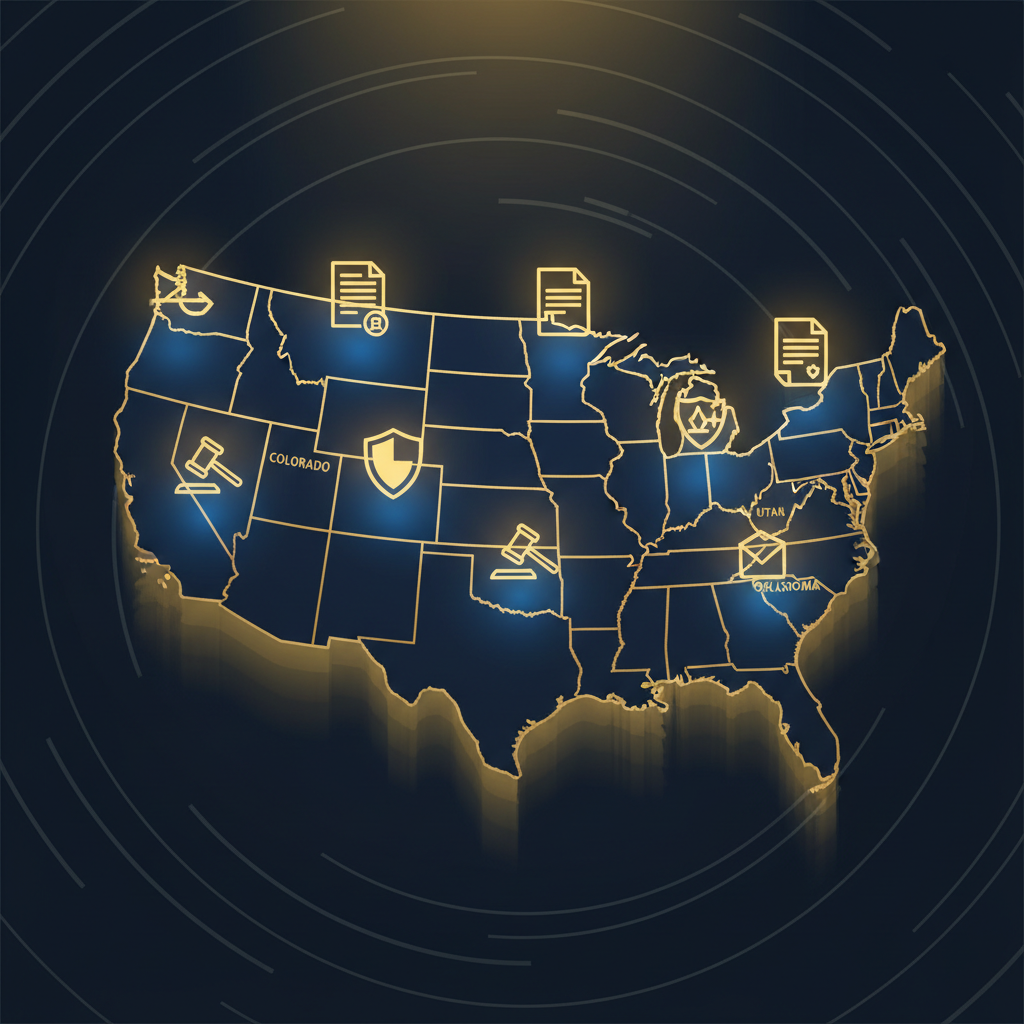
State Privacy Law Consortium Formation Date: April 16, 2025 Participants: Seven U.S. state privacy regulators
A historic bipartisan consortium was formed to coordinate privacy enforcement across states, including California, Colorado, Connecticut, Oregon, Texas, Virginia, and Washington.
Collaborative Enforcement Priorities:
- Cross-jurisdictional investigation coordination- Standardized penalty structures- Shared threat intelligence on privacy violations- Unified approach to emerging technology regulation
Privacy Compliance Guide: Global Requirements & Best Practices
Financial Impact Analysis: The True Cost of Non-Compliance
Fine Size Evolution
The data reveals escalating financial consequences:
- GDPR: 23% increase in average fine size year-over-year- CCPA: 156% increase from warning letters to financial penalties- HIPAA: 41% increase in average settlement amounts- COPPA: 67% increase in maximum penalty enforcement
Budget Planning Implications
Organizations across size categories face significant compliance investment requirements:
Small Organizations (< 50 employees)
Annual Privacy Compliance Budget: $75,000 - $150,000
- Legal counsel and compliance consulting: $30,000-$50,000- Technology infrastructure upgrades: $25,000-$50,000- Training and certification programs: $10,000-$20,000- Insurance and risk mitigation: $10,000-$30,000
Medium Organizations (50-500 employees)
Annual Privacy Compliance Budget: $200,000 - $500,000
- Dedicated privacy staff or consultant: $80,000-$150,000- Technology platform implementations: $75,000-$200,000- Third-party assessments and audits: $25,000-$75,000- Training and awareness programs: $20,000-$75,000
Large Organizations (500+ employees)
Annual Privacy Compliance Budget: $500,000 - $2,000,000+
- Internal privacy team (2-5 FTEs): $200,000-$750,000- Enterprise privacy technology stack: $150,000-$500,000- External legal and consulting support: $100,000-$400,000- Comprehensive training and certification: $50,000-$350,000
Sector-Specific Compliance Imperatives
Healthcare Organizations: Immediate Action Required
Risk Analysis Compliance Requirements:
- Annual Comprehensive Assessments: Organization-wide evaluation of ePHI vulnerabilities- Documented Methodologies: Formal risk analysis procedures and documentation- Remediation Planning: Specific plans to address identified vulnerabilities- Regular Updates: Risk analyses must reflect current threat landscapes- Third-Party Validation: Independent verification of risk analysis completeness
Immediate Actions (Next 30 Days):
- Comprehensive risk analysis audit using third-party experts- Advanced email security implementation- Multi-factor authentication deployment- Endpoint protection enhancement- Incident response testing
Technology Companies: COPPA Modernization
Age Verification Overhaul:
- Implement AI-powered age estimation and verification systems- Develop separate consent flows for third-party data sharing- Create automated data retention systems- Evaluate COPPA Safe Harbor program adequacy
EU Compliance Mapping Tool | Map Cybersecurity Standards Across Frameworks
Automotive and Connected Device Manufacturers
Connected Vehicle Privacy Requirements:
- Comprehensive privacy impact assessments for all vehicle data collection- Redesigned privacy preference centers for regulatory compliance- Audited third-party data sharing agreements- Cross-border transfer compliance evaluation
Financial Services: Enhanced Due Diligence
Global Privacy Compliance Mapping:
- Jurisdiction-specific privacy requirement analysis- Unified consent management across touchpoints- Enhanced vendor privacy compliance verification- Comprehensive transfer impact assessments
Strategic Compliance Recommendations
Immediate Actions (Next 30 Days)
- Comprehensive Privacy Audit: Engage external experts for jurisdiction-specific compliance assessment2. Risk Analysis Validation: Healthcare organizations must immediately verify HIPAA Security Rule compliance3. Vendor Contract Review: Audit all third-party data processing agreements4. Employee Training Launch: Implement enhanced privacy and cybersecurity awareness programs5. Incident Response Testing: Conduct tabletop exercises for data breach response procedures
GDPR & ISO 27001 Compliance Assessment Tool
Medium-Term Strategic Investments (Next 90 Days)
- Technology Infrastructure Upgrades: Implement privacy-by-design architecture2. Consent Management Platforms: Deploy comprehensive consent and preference management systems3. Data Mapping Automation: Implement automated data discovery and classification tools4. Regulatory Monitoring Systems: Deploy real-time regulatory change monitoring5. Cross-Border Transfer Assessment: Conduct comprehensive international data transfer compliance review
Long-Term Compliance Evolution (Next 12 Months)
- AI Governance Framework: Prepare for EU AI Act implementation (August 2, 2025)2. Privacy Engineering Integration: Embed privacy compliance into software development lifecycle3. Regulatory Relationship Management: Establish proactive relationships with relevant authorities4. Continuous Compliance Monitoring: Implement automated compliance monitoring and reporting5. Privacy Impact Assessment Automation: Deploy automated PIA workflows
Regulatory Outlook: What’s Coming Next
EU AI Act Implementation (August 2, 2025)
The upcoming EU Artificial Intelligence Act will introduce new enforcement mechanisms with potentially devastating financial consequences:
- Fines up to €35 million or 7% of global turnover for AI violations- Enhanced data protection requirements for AI systems- Mandatory conformity assessments for high-risk AI applications
State Privacy Law Expansion
- 12 additional states considering comprehensive privacy legislation- Enhanced enforcement coordination through state consortium- Increased focus on children’s privacy and social media regulation
Federal Privacy Legislation Momentum
- Bipartisan federal privacy framework development- Enhanced FTC enforcement authority proposals- Sector-specific privacy requirements (automotive, healthcare, financial services)
Baseline Cyber | Cybersecurity Compliance Assessment Tool
Key Strategic Imperatives for Business Leaders
Executive Accountability
C-suite leaders must recognize that privacy compliance failures can now result in personal liability. The Dutch investigation into Clearview AI executives signals a potential shift toward individual accountability that could reshape executive decision-making around privacy investments.
Proactive Investment Strategy
Organizations viewing privacy compliance as regulatory overhead rather than strategic infrastructure face existential risk. The enforcement actions of Summer 2025 demonstrate that reactive compliance approaches are insufficient for the current regulatory environment.
Technology-Enabled Compliance
Manual compliance processes cannot meet current regulatory expectations. Organizations need automated systems for:
- Real-time data discovery and classification- Continuous compliance monitoring- Automated privacy impact assessments- Dynamic consent management- Cross-border transfer tracking
Cross-Jurisdictional Coordination
Global organizations require unified privacy compliance strategies that address multiple regulatory frameworks simultaneously. The patchwork of regulations demands sophisticated compliance architectures that can adapt to evolving requirements.
GeneratePolicy.com - AI Security Policy Generator
Conclusion: The New Privacy Compliance Reality
Summer 2025 represents a watershed moment in global privacy regulation enforcement. The over €800 million in fines imposed across multiple jurisdictions clearly signals that regulators worldwide have moved definitively beyond educational warnings to substantial financial penalties.
The Strategic Imperative
Organizations that fail to prioritize privacy compliance face not only significant financial exposure but also reputational damage, operational disruption, and competitive disadvantage. The compliance landscape will continue evolving rapidly throughout 2025, with new regulations, enforcement authorities, and penalty structures reshaping the global privacy environment.
The Competitive Advantage
Conversely, organizations that invest now in comprehensive privacy compliance infrastructure will be best positioned to navigate this complex and dynamic regulatory landscape. Privacy compliance is evolving from a cost center to a competitive differentiator that enables market access, customer trust, and operational resilience.
PolicyQuest - Security Policy Scavenger Hunt
The Path Forward
The enforcement actions of Summer 2025 provide a clear roadmap for business leaders:
- Immediate Risk Assessment: Conduct comprehensive privacy compliance audits across all operations2. Strategic Investment: Allocate significant resources to privacy infrastructure and expertise3. Continuous Monitoring: Implement systems for ongoing compliance verification and improvement4. Executive Engagement: Ensure C-suite accountability and oversight for privacy compliance5. Stakeholder Communication: Develop transparent privacy communications for customers, partners, and regulators
The organizations that recognize this moment as an inflection point and act decisively will emerge stronger, more trusted, and better positioned for sustainable growth in an increasingly privacy-conscious world.
This analysis is based on publicly available regulatory enforcement actions, official government announcements, and verified industry reports from Summer 2025. For personalized compliance guidance, organizations should consult with qualified privacy counsel and compliance professionals.