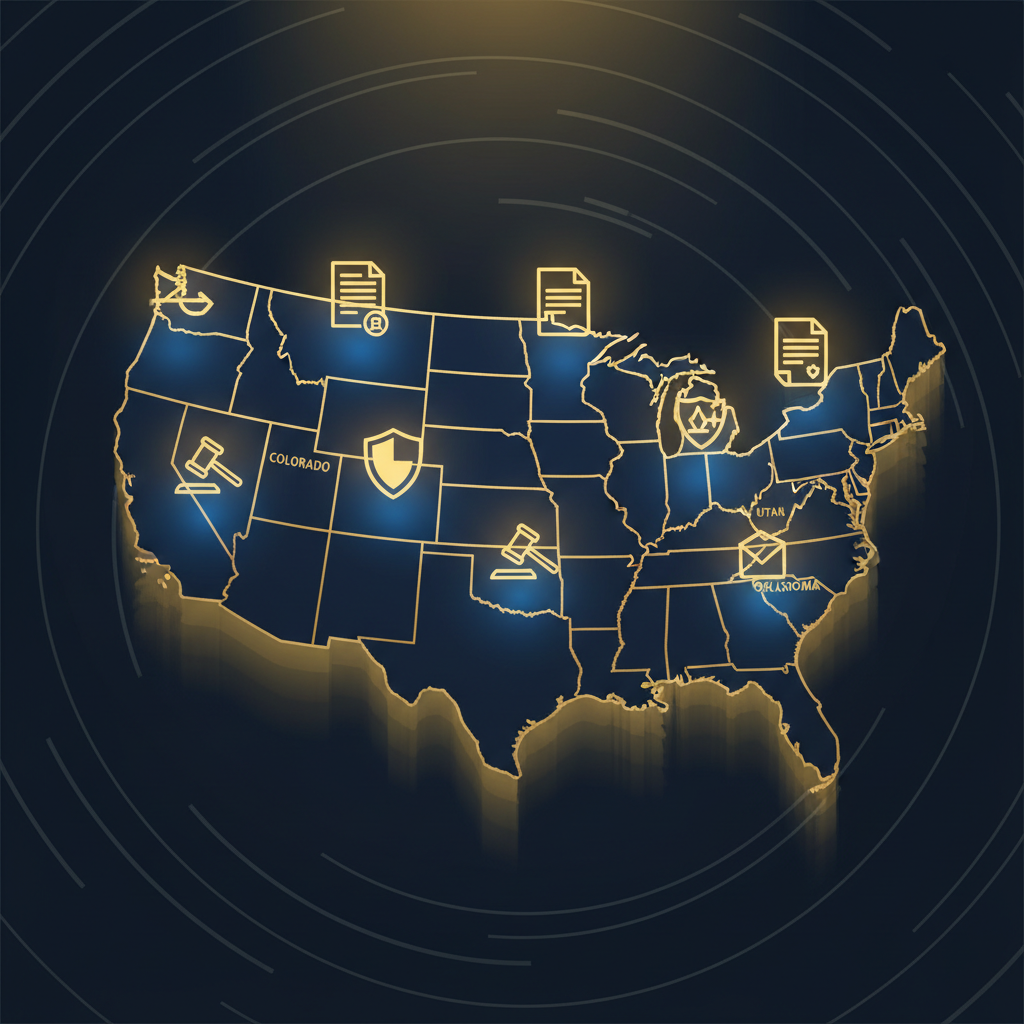
Executive Summary for Compliance Professionals
As Chief Compliance Officers, CISOs, Data Protection Officers, and Risk Management professionals, you need to understand that the current wave of internet regulation represents the most significant shift in compliance obligations since GDPR. Congressional action on nearly 20 bills—including KOSA, the App Store Accountability Act, the SCREEN Act, and Section 230 reforms—will fundamentally alter your organization’s legal landscape, regardless of political outcomes.
Critical Compliance Reality: These are bipartisan efforts with support from both parties. Your compliance strategy cannot assume one political faction will protect your organization. Both sides are implementing censorship and surveillance infrastructure under different justifications—child safety, national security, civil rights enforcement—but with identical compliance burdens for your organization.
Immediate Action Required: Organizations operating digital platforms, mobile applications, social media services, or any user-generated content systems must begin compliance planning now. Multiple bills are being fast-tracked, state laws are already in effect (Texas: January 1, 2026), and enforcement mechanisms include both government penalties and private rights of action that create class action exposure.
This guide provides compliance professionals with actionable intelligence on regulatory requirements, implementation timelines, risk assessment frameworks, and strategic recommendations for navigating this complex legislative environment.
Understanding the Legislative Landscape: Bills That Impact Your Compliance Program
The Kids Online Safety Act (KOSA): Duty of Care and State-Level Enforcement
Status: Passed Senate 91-3 (July 2024), reintroduced with amendments (May 2025), awaiting House action
Compliance Impact: HIGH - Creates affirmative obligations to prevent harm to minors with vague definitions and state-level enforcement
Key Provisions Affecting Compliance:
- Duty of Care Standard: Platforms must take “reasonable measures in its design and operation” to prevent and mitigate specified harms to minors, including:
- Mental health disorders (anxiety, depression, eating disorders, substance abuse, suicidal behaviors)- Patterns of compulsive usage- Online bullying, harassment, and abuse- Sexual exploitation and abuse- Exposure to content promoting self-harm, suicide, eating disorders, substance abuse, or other matters that pose a risk to physical or mental health2. Enforcement Mechanisms:
- Federal Trade Commission enforcement authority- State Attorney General enforcement (creating 50+ different interpretation risks)- Penalties for violations (not yet specified but likely substantial given FTC authority)3. Safeguards Requirements:
- Default strongest privacy settings for minors- Options to disable addictive product features- Ability to opt out of algorithmic recommendations- Readily accessible tools to delete accounts and data
Arkansas’ Latest Attempt at Censorship is Blocked—Again: Federal Court Halts Act 901
Compliance Challenges:
Definitional Ambiguity: Terms like “compulsive usage,” “anxiety,” and “mental health disorders” lack clinical consensus or legal precedent. This creates impossible compliance standards where platforms must predict psychological harm.
Multi-Jurisdictional Interpretation: With state AG enforcement, your organization faces 50+ different interpretations of “reasonable measures” and “harmful content.” What satisfies enforcement in California may trigger prosecution in Texas and vice versa.
Content Moderation Liability: The duty of care creates affirmative obligations to remove or restrict content. Over-compliance leads to censorship concerns and user backlash. Under-compliance creates enforcement risk. There is no safe harbor.
Political Weaponization: Conservative groups including The Heritage Foundation have explicitly stated they support KOSA to censor LGBTQ+ content. Senator Marsha Blackburn said the bill should prioritize “protecting minor children from the transgender [sic] in this culture.” Progressive enforcement may target different content categories. Your content moderation decisions will be second-guessed through a political lens regardless of good faith efforts.
Read more: YouTube’s AI Age Verification: The Global Push for Online Control - Analysis of KOSA’s enforcement mechanisms and political motivations
Compliance Recommendations:
- Conduct Harm Assessment Audits: Document your analysis of potential harms on your platform, even if KOSA doesn’t pass. This creates defensible positions for future litigation.2. Implement Tiered Controls: Create technical architectures that allow rapid deployment of content restrictions, age-gating, and algorithmic modifications without full platform redesigns.3. Build State-Specific Enforcement Tracking: Monitor state AG priorities and public statements to predict enforcement trends. Create compliance matrices showing how different state interpretations affect your operations.4. Document Reasonable Measures: Create detailed records of design decisions, content moderation policies, and user protection features. “Reasonable measures” will be interpreted retrospectively—your documentation is your defense.5. Prepare for Over-Removal Litigation: Users will sue for wrongful content removal. Platforms must balance duty of care enforcement against First Amendment and breach of contract claims.
The App Store Accountability Act: Universal Age Verification Infrastructure
Status: Multiple state versions enacted (Texas: Jan 1, 2026; Utah: May 7, 2026; Louisiana: July 1, 2026), federal bills pending in 119th Congress
Compliance Impact: CRITICAL - Requires fundamental restructuring of app distribution, user authentication, and parental consent workflows
Key Provisions Affecting Compliance:
- Age Verification Requirements:
- App stores must verify age for ALL users using “commercially reasonable methods”- Categorize users into four mandatory age groups: under 13, 13-15, 16-17, 18+- No statutory definition of “commercially reasonable” creates implementation uncertainty2. Parental Consent Architecture:
- For users under 18: Create linked parent accounts- Obtain parental consent on a download-by-download basis for each app, purchase, and in-app purchase- Maintain real-time consent verification systems3. Developer Obligations:
- Receive age category signals from app stores- Implement age-appropriate restrictions- Assign age ratings to apps AND individual in-app purchases- Provide content justifications to app stores- Delete personal data after verification4. Enforcement and Liability:
- Texas: $10,000 per violation (AG enforcement) + private right of action for parents- Class action exposure for systematic violations affecting thousands/millions of users- Violations classified as deceptive trade practices
Read more:
- Texas SB2420: Complete Compliance Guide for App Stores and Developers- Texas App Store Age Verification Law Faces Legal Challenges- Google Adds Age Check Tech as Texas, Utah, and Louisiana Enforce Digital ID Laws
Compliance Challenges:
Technical Implementation Complexity: The transactional consent model (consent required for each download) is unprecedented. Existing age verification systems verify once at account creation. These laws require persistent, real-time verification for every transaction.
Data Minimization Conflicts: Age verification inherently requires collecting more data (government ID, biometric scans, parental information). This conflicts with GDPR Article 5, CCPA data minimization principles, and best practices established over decades.
Interstate Commerce Conflicts: Different state requirements create impossible compliance scenarios:
- Texas requires consent for each transaction- Utah provides developer safe harbor based on app store data- Louisiana explicitly rejects safe harbor protections- No federal preemption means contradictory state requirements apply simultaneously
Breach Risk Amplification: Discord leaked 70,000 users’ ID photos after UK Online Safety Act compliance. Your organization becomes custodian of highly sensitive identity documents for millions of users. Breach notification obligations multiply. Litigation exposure increases exponentially.
Third-Party Verification Vendor Risk: Most platforms will use third-party age verification services (Yoti, Persona, AU10TIX). These vendors have poor security track records. AU10TIX left credentials exposed for over a year. Your vendor risk management program must assess these providers, but viable alternatives may not exist.
Compliance Recommendations:
- Conduct Jurisdiction-Specific Compliance Audits:
- Map your user base by state/country- Identify conflicting requirements between jurisdictions- Calculate compliance costs for each regulatory scenario- Determine if certain markets become economically unviable2. Implement Privacy-Preserving Verification Options:
- Evaluate zero-knowledge proof systems (though these still require initial identity verification)- Consider device-level attestation where available- Document why chosen methods represent “commercially reasonable” approaches3. Create Parental Consent Workflows:
- Build scalable systems for download-by-download consent (this will be technically challenging)- Implement timeout/expiration mechanisms- Create audit trails showing consent for each transaction- Prepare for consent revocation and data deletion workflows4. Establish Age Verification Data Governance:
- Segregate age verification data from other user data- Implement strict access controls (only authorized compliance/security personnel)- Create enhanced encryption for PII/biometric data- Establish data retention minimization (delete immediately after verification where legally permitted)- Prepare incident response plans specifically for age verification data breaches5. Develop Developer Communication Programs:
- If you operate an app store: Create developer documentation for age category signals- If you’re a developer: Establish processes to receive and act on age data from stores- Build technical integration points for age-gating features6. Monitor Legal Challenges:
- Multiple lawsuits challenge these laws on First Amendment grounds- CCIA and student coalitions argue constitutional violations- Preliminary injunctions could delay enforcement- Track legal developments before making expensive technical investments
Read more: Meta’s App Store Age Verification Push: Privacy Theater That Threatens Internet Freedom - Analysis of Meta’s lobbying for app-store-level verification and implications for smaller platforms
The SCREEN Act: Nationwide Age Verification for “Harmful” Content
Status: Introduced in 119th Congress (H.R. 1623, S. 737)
Compliance Impact: EXTREME - Would require age verification for vast categories of online content, potentially including user-generated content platforms
Key Provisions Affecting Compliance:
- Covered Platforms: Any interactive computer service that makes “harmful to minors” content available for profit, including:
- Adult content websites (primary target)- Social media with user-generated content- Platforms where users might post content meeting broad definitions of “harmful”2. Age Verification Requirements:
- Must go beyond self-attestation- Require “technology verification measures”- Must disclose verification processes to government- Apply to ALL users accessing covered content (not just minors)3. Broad Content Definitions: “Harmful to minors” includes material that:
- Appeals to prurient interest in nudity, sex, or excretion (with respect to minors)- Depicts sexual acts or contact in patently offensive ways- Includes “lewd exhibition of genitals”
Compliance Challenges:
Scope Uncertainty: The definition of “covered platform” is broad enough to capture:
- Social media platforms (users post content that might be deemed harmful)- Fan fiction sites- Art platforms- Educational websites with anatomical content- Health information sites- LGBTQ+ resource platforms
Universal Surveillance Infrastructure: Unlike targeted adult content laws, SCREEN Act verification applies whenever any content on your platform might meet the “harmful to minors” definition. This means universal age verification for platforms with any user-generated content.
VPN Enforcement Impossibility: Users can trivially bypass age verification using VPNs. This creates pressure for VPN restrictions (already proposed in Wisconsin and Michigan), which would require ISP-level monitoring and blocking.
Constitutional Vulnerability: Previous attempts at similar legislation (Communications Decency Act, Child Online Protection Act) were struck down as unconstitutional. SCREEN Act faces same First Amendment challenges but would require expensive compliance investments before inevitable legal defeat.
Read more: The SCREEN Act: How “Protecting Children” Became the Trojan Horse for Mass Digital Surveillance - Detailed analysis of SCREEN Act’s true surveillance purpose and implementation challenges
Compliance Recommendations:
- Conduct Content Audit: Determine if any content on your platform could be interpreted as meeting “harmful to minors” definitions. If you have user-generated content, the answer is almost certainly yes.2. Calculate Compliance Costs: Age verification for all users is expensive:
- Third-party verification services charge per verification- System integration and maintenance costs- Customer service overhead (failed verifications, disputes)- Legal costs for inevitable constitutional challenges3. Evaluate Geographic Blocking: Consider whether blocking US users entirely is more cost-effective than compliance. Multiple platforms have chosen this option for UK Online Safety Act compliance.4. Assess Class Action Exposure: Age verification requirements create massive data breach liability. If SCREEN Act passes, platforms face:
- Breach notification to potentially millions of users- Class action litigation for negligent data handling- Regulatory enforcement for inadequate safeguards5. Join Industry Coalitions: CCIA, NetChoice, and other trade associations are fighting SCREEN Act. Your compliance budget includes supporting these efforts.
Section 230 Reform: The Foundation of Internet Compliance
Status: 10+ bills in 119th Congress; sunset proposal for January 1, 2027
Compliance Impact: EXISTENTIAL - Section 230 repeal or substantial modification would fundamentally alter liability framework for all user-generated content
Current Section 230 Protection:
Platforms are not liable for third-party content posted by users, and have broad immunity for good-faith content moderation decisions. This enables:
- Comment sections- User reviews- Social media posts- Marketplace listings- Any platform where users contribute content
Proposed Changes Affecting Compliance:
1. Complete Sunset (Graham/Durbin Bill):
- Section 230 expires January 1, 2027- No replacement framework specified- Creates complete uncertainty about platform liability after that date
2. The SAFE TECH Act (Warner, Hirono, Klobuchar, Blumenthal):
- Removes Section 230 protection for paid advertisements- Allows civil rights violation claims against platforms- Permits wrongful death actions- Removes immunity for cyber-stalking and harassment cases- Allows suits under Alien Tort Claims Act (international human rights violations)
3. The EARN IT Act:
- Conditions Section 230 immunity on “robust efforts” to combat child exploitation- Creates government commission to define “robust efforts”- Platforms must earn immunity through compliance with undefined standards
4. The TAKE IT DOWN Act (S. 146):
- Creates notice-and-takedown system for non-consensual intimate imagery (NCII)- Broad definitions could capture any “intimate or sexual content”- Platforms must remove content within specified timeframes or lose Section 230 protection- Supported by Trump administration; Trump stated he would use it to censor critics
Read more:
- Section 230: The Backbone of the Internet and Its Controversies- The TAKE IT DOWN Act: America’s First Federal Law Against Deepfakes and Revenge Porn- Rep. Nancy Mace’s RESPECT Act: Strengthening Federal Response to Deepfakes and Revenge Porn
Compliance Challenges:
Litigation Explosion: Without Section 230 immunity, platforms face:
- Defamation suits for user comments/reviews- Product liability for marketplace listings- Civil rights claims for discriminatory user content- Wrongful death claims for content allegedly causing harm- Harassment and stalking claims for user interactions
Content Moderation Whipsaw: Current Section 230 protects both:
- Leaving content up (not liable for user posts)- Taking content down (immunity for moderation decisions)
Reforms eliminate protection for leaving content up while maintaining liability for taking it down (breach of contract, First Amendment violations). Platforms must moderate more aggressively while facing more litigation for moderation decisions.
International Compliance Complexity: Section 230 is US law. If repealed/modified, US platforms face liability patchwork:
- US: Limited or no immunity- EU: Digital Services Act notice-and-action requirements- UK: Online Safety Act duty of care- Australia: eSafety Commissioner takedown powers
Insurance Market Collapse: Platform liability insurance is predicated on Section 230 protection. Without it, premiums become unaffordable or coverage becomes unavailable. D&O insurance for platform boards similarly affected.
Compliance Recommendations:
- Model Post-Section 230 Liability:
- Calculate litigation costs without Section 230 protection- Estimate settlement/judgment exposure across claim categories- Determine if business model remains viable2. Enhance Content Moderation Systems:
- Implement more aggressive automated filtering- Increase human moderation capacity- Create audit trails for all moderation decisions- Prepare detailed documentation of “reasonable efforts”3. Restructure User Agreements:
- Add mandatory arbitration clauses (if legally permissible in your jurisdictions)- Expand indemnification provisions- Create user warranties about content legality- Implement class action waivers where allowed4. Evaluate Business Model Changes:
- Consider eliminating user-generated content features- Shift to curated/editorial content models- Implement pre-publication review for all user content (not scalable for large platforms)- Assess whether certain features create disproportionate liability5. Increase Insurance Coverage:
- Purchase maximum available liability coverage now while Section 230 exists- Explore captive insurance arrangements- Consider self-insurance reserves6. Engage in Advocacy:
- Join trade associations fighting Section 230 repeal- Educate policymakers about compliance costs- Present alternatives to complete repeal
COPPA 2.0: Expanding Child Privacy to Teenagers
Status: Introduced separately from KOSA in 119th Congress; previous versions passed Senate Commerce Committee
Compliance Impact: HIGH - Extends stringent child privacy requirements to teens 16-18, dramatically expanding covered user base
Key Provisions Affecting Compliance:
- Age Expansion: Extends COPPA protections from under-13 to:
- Under 16 (most versions)- Under 18 (Heritage Foundation and some Republican proposals)2. Enhanced Requirements:
- Ban targeted advertising to covered age groups- Mandatory data deletion upon parental request- Expanded definition of “personal information”- Prohibition on conditioning service on excess data collection3. Actual Knowledge Standard: Platforms have obligations when they have “actual knowledge” users are in covered age range (similar to current COPPA)
Read more:
- In Addition to COPPA and KOSA for Child Safety Bills- Global Child Safety Legislation Wave: July-August 2025 Compliance Guide
Compliance Challenges:
User Base Expansion: Current COPPA affects narrow user segment (under-13s). COPPA 2.0 covering 16-18 year-olds affects:
- Most social media platforms- Gaming platforms- Educational technology- Communication platforms- Teen-targeted services
Actual Knowledge Triggers: Receipt of age verification data from app stores may constitute “actual knowledge” that users are under 16/18, triggering COPPA 2.0 obligations. This creates dangerous interaction with App Store Accountability Act requirements.
Targeted Advertising Ban: Teen users represent significant advertising revenue. COPPA 2.0 would eliminate this entirely. Platforms must:
- Identify all users under 16/18- Exclude from ad targeting- Recalculate business model viability
Data Deletion Complexity: Parental deletion requests require:
- Identifying all data associated with minor accounts- Removing from production systems, backups, analytics databases- Documenting deletion for compliance verification- Doing so within specified timeframes
Compliance Recommendations:
- Expand Age Detection Systems: Invest in technology to identify users in 13-18 age range without requiring age verification (which has its own compliance problems)2. Restructure Advertising Systems: Create technical architectures that exclude users under 16/18 from targeted advertising while maintaining ad-supported business models3. Implement Teen Privacy Settings: Develop age-appropriate privacy defaults and parental controls for teen users4. Create Data Deletion Workflows: Build systems to handle parental deletion requests at scale, including data mapping to locate all minor-associated data5. Assess Small Platform Impact: COPPA 2.0 has no small business exception. Even small platforms with occasional teen users face compliance requirements designed for large social media companies
State-Level Compliance: The Patchwork Problem
Current State Landscape
As of December 2025, 25 states have passed age verification laws, with 40+ states having introduced legislation. This creates impossible compliance scenarios for national platforms.
Key State-Level Variations:
Age of Protected Minor:
- Federal COPPA: Under 13- Some states: Under 16- Other states: Under 18- Result: Different obligations based on user location
Verification Methods:
- Some states specify acceptable verification methods- Others use “commercially reasonable” without definition- Texas requires parental consent for each transaction- Utah allows safe harbor for developer reliance on app store data
Content Scope:
- Some states: Adult content only- Texas: All applications- Louisiana: Broader content categories
Enforcement:
- State AG enforcement (50+ different interpretations)- Private rights of action (class action exposure)- Varying penalty structures
VPN Restrictions: The Compliance Enforcement Problem
Wisconsin AB 105/SB 130: Would criminalize using VPNs to access age-restricted content
Michigan HB 4938: Would force ISPs to monitor and block VPN connections; targets transgender expression content in addition to adult content
UK Precedent: Digital Minister stated VPN bans remain “on the table” to enforce Online Safety Act, triggering 1,400% surge in UK VPN usage
Read more:
- Wisconsin’s Controversial VPN Ban: Age Verification Bill Threatens Digital Privacy- VPN Ban “On the Table” as UK Online Safety Act Faces Expansion
Compliance Impact:
Technical Impossibility: Platforms cannot reliably detect and block all VPN usage without:
- ISP-level cooperation (not available to most platforms)- Continuous IP address monitoring and blocking (expensive and imperfect)- Deep packet inspection (privacy violations, technical complexity)
Enforcement Futility: Even with VPN restrictions, users can:
- Use overseas VPN providers who ignore US law- Use decentralized VPNs (impossible to block)- Use proxy services, Tor, or other circumvention tools
Compliance Theater: Age verification + VPN restrictions create appearance of protection while providing none. Compliance costs are real; effectiveness is zero.
Risk Assessment Framework for Compliance Officers
Immediate Risk Categories
1. Regulatory Enforcement Risk
- Timeline: Texas law effective January 1, 2026 (imminent)- Financial Impact: $10,000 per violation + legal defense costs- Mitigation: Implement state-specific compliance for Texas, Utah, Louisiana immediately
2. Class Action Litigation Risk
- Timeline: Private rights of action effective with state laws- Financial Impact: Potentially billions for systematic violations affecting millions of users- Mitigation: Implement robust compliance programs, consider mandatory arbitration clauses
3. Data Breach Risk
- Timeline: Immediate upon collection of age verification data- Financial Impact: Breach notification costs + litigation + regulatory penalties- Mitigation: Enhanced security for PII/biometric data, vendor risk management, breach response planning
4. Operational Risk
- Timeline: Ongoing as laws take effect- Financial Impact: Loss of user base, reduced ad revenue, increased costs- Mitigation: Business model adjustments, product feature changes, market exit planning
Medium-Term Risk Categories
1. Constitutional Challenge Outcomes
- Timeline: 1-3 years for litigation resolution- Impact: Compliance investments may be wasted if laws struck down- Mitigation: Monitor litigation, delay expensive implementations where possible, prepare for multiple scenarios
2. Federal Preemption
- Timeline: Uncertain (depends on Congressional action)- Impact: State laws may be preempted by federal framework, requiring compliance system rebuilding- Mitigation: Build flexible systems that can adapt to federal requirements
3. International Expansion
- Timeline: Ongoing as global regulations proliferate- Impact: UK Online Safety Act, EU Digital Services Act, Australia eSafety laws create conflicting requirements- Mitigation: Jurisdiction-specific compliance strategies, geographic blocking where appropriate
Long-Term Strategic Risks
1. Business Model Viability
- Question: Can your platform operate profitably under these compliance regimes?- Considerations:Cost of age verification at scale- Revenue loss from teen advertising bans- Litigation costs without Section 230 protection- Market contraction from user attrition
2. Platform Liability Evolution
- Question: What does platform operation look like without Section 230?- Considerations:Content moderation costs increase 10-100x- Litigation becomes primary operating expense- Insurance costs increase dramatically or become unavailable- Only largest platforms can afford to operate
3. Surveillance State Infrastructure
- Question: How do you operate when age verification becomes universal digital ID?- Considerations:Government access to age verification databases- Expansion of verification requirements beyond age- Integration with law enforcement systems- Mission creep from child protection to general surveillance
Compliance Implementation Roadmap
Phase 1: Immediate Actions (Q4 2025 - Q1 2026)
For Platforms Subject to Texas Law (Effective January 1, 2026):
- Conduct Gap Analysis (Due: December 15, 2025)
- Document current age verification capabilities- Identify technical implementation gaps- Calculate compliance costs- Assess vendor options2. Implement Minimum Viable Compliance (Due: January 1, 2026)
- Deploy age verification for Texas users- Implement parental consent workflows- Create age category transmission to developers- Establish compliance documentation systems3. Monitor Enforcement Actions (Ongoing)
- Track Texas AG enforcement priorities- Monitor competitor enforcement actions- Identify enforcement patterns- Adjust compliance strategy based on actual enforcement
For All Platforms:
- Assess KOSA Exposure
- Determine if your platform serves minors- Evaluate content that could be deemed “harmful”- Document current safety features- Prepare for duty of care implementation2. Evaluate Section 230 Dependency
- Model liability without Section 230 protection- Calculate litigation cost increases- Assess business model viability- Develop contingency plans3. Review Insurance Coverage
- Verify current liability coverage limits- Assess coverage for age verification breaches- Increase coverage if available- Document coverage gaps for board reporting
Phase 2: Medium-Term Preparations (Q2-Q4 2026)
- Expand Age Verification Infrastructure
- Implement nationwide age verification (preparing for federal law)- Test multiple verification vendors- Build redundancy into verification systems- Create user experience optimization2. Enhance Content Moderation
- Implement AI-based harmful content detection- Increase human moderation capacity- Create minor-specific content policies- Document moderation decision-making3. Build Compliance Monitoring
- Create dashboards tracking compliance metrics- Implement automated compliance reporting- Build state-specific compliance tracking- Prepare for regulatory audits4. Develop Litigation Response Capabilities
- Retain specialized counsel- Create litigation hold procedures- Build discovery response teams- Prepare for class action defense
Phase 3: Long-Term Strategic Planning (2027+)
- Evaluate Business Model Transformation
- Consider elimination of user-generated content- Assess shift to curated content models- Evaluate market exit strategies- Develop new revenue streams not dependent on advertising2. Prepare for Post-Section 230 Environment
- Build legal reserves for litigation- Consider self-insurance arrangements- Evaluate platform sale or shutdown- Assess international relocation options3. Engage in Policy Advocacy
- Join industry coalitions- Provide compliance cost data to policymakers- Support legal challenges to unconstitutional laws- Advocate for workable compliance frameworks
Key Differences from GDPR Compliance
Compliance officers familiar with GDPR implementation may assume similar approaches work for US internet regulation. This is incorrect. Key differences:
GDPR vs. US Internet Regulation
Factor GDPR US Internet Regulation
Scope Single coherent framework 50+ state laws + federal bills with conflicting requirements
Predictability Detailed regulations, implementation guidance Vague standards like “commercially reasonable” and “harmful content”
Enforcement Centralized data protection authorities State AGs with political motivations + private litigation
Safe Harbors Compliance mechanisms earn protection No safe harbor; strict liability or subjective “reasonable efforts”
Data Minimization Core principle Directly conflicts with age verification requirements
Penalties Predictable (4% global revenue) Unlimited class action exposure
Political Neutrality Generally enforced neutrally Explicitly political (LGBTQ+ censorship, content control)
Compliance Approach Differences
GDPR Approach (does not work for US internet regulation):
- Implement comprehensive privacy program- Document lawful basis for processing- Conduct DPIAs- Maintain compliance continuously
US Internet Regulation Approach (required):
- Implement contradictory requirements simultaneously- Accept that perfect compliance is impossible- Prepare for politically motivated enforcement- Build litigation response capabilities- Consider market exit strategies
Budgeting for Compliance
Cost Categories for Age Verification Compliance
Initial Implementation (One-Time Costs):
- Technology platform development: $500K - $5M depending on scale- Vendor integration: $100K - $500K per vendor- Legal review and documentation: $250K - $1M- User experience design and testing: $100K - $500K- Security audits and penetration testing: $50K - $200K
Ongoing Operational Costs (Annual):
- Third-party verification fees: $0.25 - $2.00 per verification × user base- Customer service (failed verifications): $1M - $10M depending on scale- Compliance monitoring and reporting: $200K - $1M- Legal counsel and regulatory monitoring: $500K - $2M- System maintenance and updates: $200K - $1M- Security monitoring and incident response: $300K - $1.5M
Contingency Costs:
- Data breach response: $3M - $50M per incident- Class action defense: $5M - $50M per case- Regulatory enforcement defense: $500K - $5M per action- Settlement costs: Unlimited
Cost Categories for Section 230 Loss
Content Moderation Increase:
- Current spend (with Section 230): Baseline- Estimated increase without Section 230: 10x - 100x baseline- For reference: Facebook spent $5B on safety/security in 2022 WITH Section 230 protection
Litigation Costs (Annual):
- Outside counsel: $10M - $100M+ depending on platform size- Settlements: $50M - $500M+- Insurance premiums: 5x - 10x current (if available)
ROI Analysis
Critical Question: Do compliance costs exceed platform revenue?
For many platforms, the answer is yes. When compliance costs exceed revenue, compliance becomes impossible. Options:
- Exit market2. Eliminate features3. Operate illegally and accept enforcement risk4. Lobby for regulatory changes
International Compliance Considerations
US platforms don’t operate in isolation. Compliance officers must also track:
UK Online Safety Act
- Effective: July 25, 2025 (age verification enforcement phase)- Requirements: Similar to US proposals but already in force- Penalties: £18M or 10% global revenue- VPN restrictions: Under consideration
EU Digital Services Act
- Effective: Currently enforced- First penalty: €120M fine against X (December 2025)- Requirements: Notice-and-action for illegal content, transparency reporting- Scope: Applies to US companies serving EU users
Australia eSafety Commissioner
- Requirements: Under-16 social media ban effective December 10, 2025- Penalties: Up to $49.5M for non-compliance- Scope: All social media platforms accessible to Australians
Read more: The Global Age Verification Disaster: How Privacy Dies in the Name of “Safety” - Comprehensive analysis of global age verification requirements and failures
Compliance Strategy for International Operations
- Geographic Blocking: Consider blocking users from high-compliance-cost jurisdictions2. Jurisdiction-Specific Features: Implement different features for different regions3. Data Localization: Store verification data locally to comply with data residency requirements4. Entity Structuring: Create separate legal entities for different jurisdictions to limit liability exposure
Board-Level Reporting Requirements
What Your Board Needs to Know
Risk Materiality: These compliance obligations are material to company operations and financial performance. They require board-level awareness and strategic decision-making.
Key Points for Board Reporting:
- Regulatory Timeline: Texas law effective January 1, 2026; federal legislation could pass in 2025-2026; Section 230 sunset proposed for January 1, 20272. Financial Impact: Compliance costs may exceed current budget allocations by 5-10x; class action exposure is unlimited; business model viability is at risk3. Strategic Options:
- Full compliance (highest cost, reduces legal risk)- Partial compliance (medium cost, medium legal risk)- Market exit (eliminates revenue, eliminates risk)- Product changes (reduces features, reduces risk)4. Litigation Exposure: Without Section 230, platform faces unlimited litigation risk; insurance may be unavailable; company should model worst-case scenarios5. Advocacy Investment: Company should join industry coalitions fighting these laws; advocacy budget should be material; legal challenges are company’s best defense
Board Resolution Template
For boards requiring formal action:
RESOLVED, that the Board of Directors authorizes management to:

1. Implement age verification systems required by Texas Senate Bill 2420
   and similar state laws, at estimated cost of $[X]M;

2. Prepare for Kids Online Safety Act compliance obligations including
   duty of care implementation and state-level enforcement, at estimated
   cost of $[Y]M annually;

3. Model company operations without Section 230 protection and prepare
   contingency plans including potential market exit strategies;

4. Join industry coalitions and support legal challenges to
   unconstitutional internet regulations, at estimated cost of $[Z]M;

5. Increase legal reserves for platform litigation by $[A]M to prepare
   for post-Section 230 enforcement environment;

6. Report quarterly to the Board on compliance implementation progress,
   regulatory developments, and litigation exposure.
Conclusion: The Compliance Officer’s Dilemma
As compliance professionals, we are trained to implement workable compliance programs for complex regulations. GDPR was challenging but achievable. SOX was expensive but clear. Even CCPA provided a coherent framework.
The current wave of US internet regulation is different. It is:
- Contradictory: State laws conflict with each other and with federal proposals- Vague: Key terms lack definitions (“commercially reasonable,” “harmful content”)- Political: Enforcement will be weaponized by both parties against different content- Impossible: Perfect compliance is structurally unachievable- Expensive: Costs may exceed platform revenue for many organizations
The compliance officer’s dilemma: We cannot comply perfectly. We cannot predict enforcement. We cannot eliminate liability. We can only manage risk, document reasonable efforts, and prepare for litigation.
Recommended Posture
- Implement Defensible Compliance: Do enough to show good faith efforts without spending unlimited resources on impossible standards2. Document Everything: Your documentation is your defense in enforcement actions and litigation3. Monitor Enforcement Patterns: Adjust strategy based on actual enforcement priorities rather than statutory text4. Prepare for Litigation: Accept that litigation is inevitable; build response capabilities5. Engage in Advocacy: Support industry efforts to create workable compliance frameworks6. Maintain Strategic Optionality: Preserve ability to exit markets, eliminate features, or shut down operations if compliance becomes impossible
Final Recommendation
The most important compliance decision: Determine your organization’s risk tolerance and compliance budget ceiling. If full compliance costs exceed that ceiling, acknowledge this reality early and make strategic decisions accordingly.
Some platforms will comply fully. Some will partially comply. Some will exit markets. Some will fight in court. There is no “correct” answer—only risk management decisions appropriate to your organization’s circumstances.
As compliance officers, our job is to present these options clearly to leadership, implement chosen strategies competently, and document our efforts thoroughly. The regulatory environment is broken. Compliance officers didn’t break it. But we must operate within it.
Additional Resources
Compliance Tools and Frameworks
- PII Compliance Navigator - Maps sensitive data categories across 19 US state privacy laws- US State Breach Notification Requirements Tracker - Comprehensive breach notification law database
Essential Reading for Compliance Officers
Age Verification and App Store Laws:
- Texas SB2420: Complete Compliance Guide for App Stores and Developers- The Age Verification Compliance Nightmare- Google Adds Age Check Tech as Texas, Utah, and Louisiana Enforce Digital ID Laws
Child Safety Legislation:
- In Addition to COPPA and KOSA for Child Safety Bills- Global Child Safety Legislation Wave: July-August 2025 Compliance Guide- YouTube’s AI Age Verification: The Global Push for Online Control
Section 230 and Platform Liability:
- Section 230: The Backbone of the Internet and Its Controversies- The TAKE IT DOWN Act: America’s First Federal Law Against Deepfakes and Revenge Porn
Privacy and Surveillance:
VPN Restrictions and Enforcement:
Industry Organizations and Advocacy
- EFF (Electronic Frontier Foundation): https://www.eff.org - Leading digital rights organization- CCIA (Computer & Communications Industry Association): Filing constitutional challenges to state laws- NetChoice: Trade association fighting age verification laws- CDT (Center for Democracy & Technology): Policy research and advocacy
Regulatory Monitoring
- Congress.gov: Track federal bills (KOSA, SCREEN Act, Section 230 reforms)- State Legislature Websites: Monitor state-level age verification and VPN restriction bills- FTC: Monitor enforcement actions and guidance on child safety compliance
This compliance guide synthesizes research from EFF, congressional bill tracking, federal and state regulatory sources, ComplianceHub.Wiki, MyPrivacy.Blog, and Breached.Company. All sources and internal references are hyperlinked throughout.
Document Version: 1.0 (December 2025) Next Update: Quarterly as regulatory landscape evolves Contact: For compliance consulting inquiries, visit ComplianceHub.Wiki